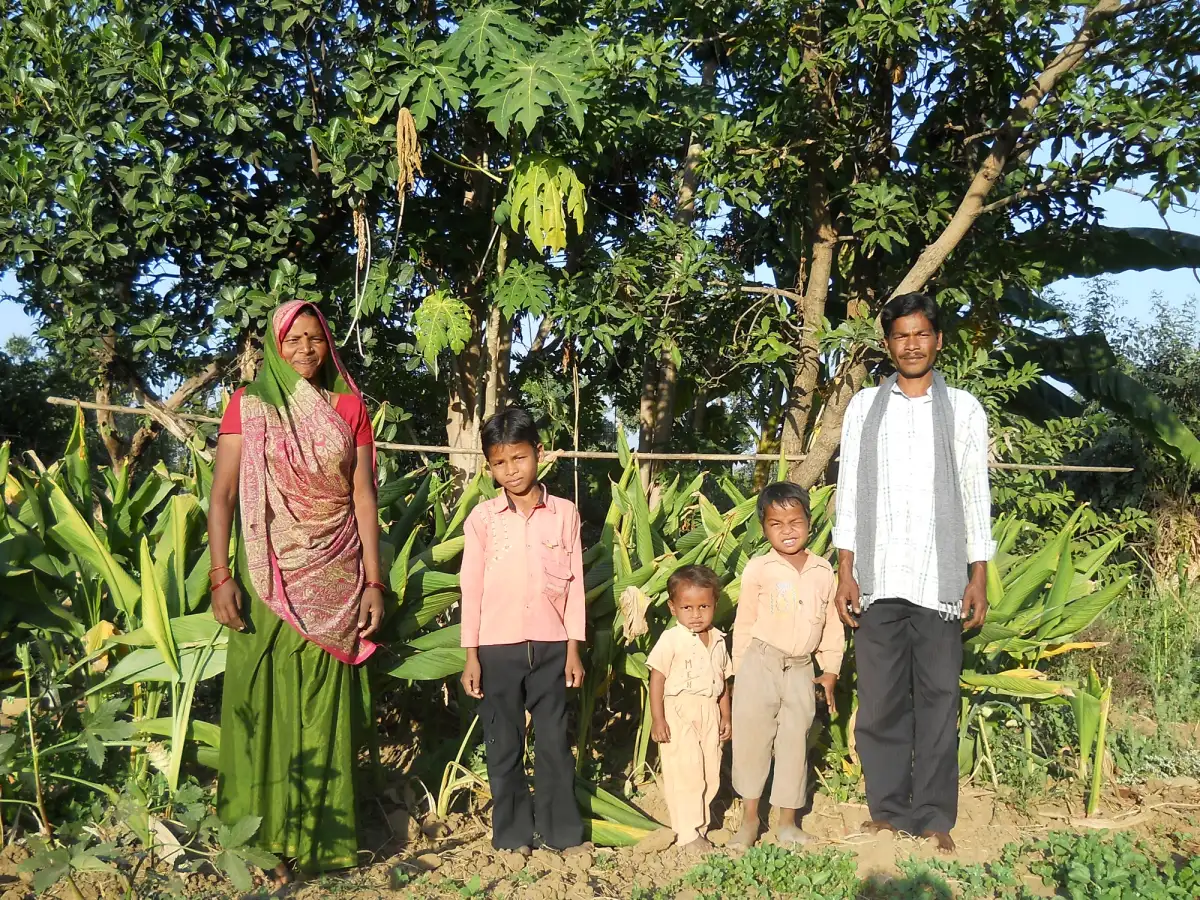
Priya and Arun hear that their matched leaf contains a children chapter. They have been trying to conceive, so every word feels heavy. A favourable year offers hope; a line about an obstacle creates fear. Before the translation is finished, they are already wondering whether to postpone a medical appointment.
This is where a spiritual consultation can overreach. A Nadi reading may carry cultural meaning or prompt reflection, but fertility, pregnancy and child health involve biology, time-sensitive care and another person's future privacy. The safest guide must explain what Kandam 5 is said to contain while refusing to turn an astrological statement into diagnosis, treatment or destiny.
A Nadi astrology child prediction is commonly associated with Kandam 5—the children, offspring, progeny or Putra chapter—after the index leaf has matched. Depending on the leaf and lineage, it may discuss parenthood, timing, number of children, family relationships, a child’s broad future and traditional remedies. Preserve the original wording and receive the chapter as spiritual family guidance. Let it support hope and reflection while fertility, pregnancy and child-health care continue with qualified professionals and the full consent of both partners.
What Kandam 5 is—and what it is not
Many Tamil Nadi traditions arrange life topics into Kandams. The general Kandam is normally used first to identify the seeker through candidate-leaf matching. If an index leaf is accepted, optional continuation chapters may be available. Kandam 5 is commonly linked to children, parenthood or progeny.
Current centre descriptions advertise questions such as whether a seeker will have children, possible timing, number, wellbeing, achievements, parent-child relationships, obstacles and remedies. Some mention adoption. Others include startling claims about lifespan, illness or death. These service lists describe what a chapter may be said to address; they do not prove that every leaf contains every detail or that any forecast is accurate.
A chapter should not be invented because the seeker requests it. Ask whether the matched bundle actually contains Kandam 5, how the leaves are linked to the index record and what the separate fee covers. If the chapter is absent, the honest outcome is “not available,” not a generic fertility consultation presented as leaf text.
The complete Kandams guide explains the common twelve core and four special chapters and why lists differ.
Identify the method before interpreting the prediction
Not every result called “Nadi child prediction” comes from a palm leaf. In a Tamil-style leaf service, the search typically begins with a thumb impression, moves through candidate statements and reaches a physical manuscript translation. The claimed source is a pre-written record.
In chart-based Nadi schools, a practitioner asks for birth details, constructs a horoscope and applies planetary rules. Online material frequently discusses Jupiter, the fifth house, its ruler and transits. That is chart interpretation, even when it uses the word Nadi. It does not require finding an individual destiny leaf.
Ask four quick questions
What input began the reading: thumb impression or birth data?
Was a physical leaf located and shown?
Is the conclusion translated from text or derived from a horoscope?
What would count as no match, no chapter or insufficient certainty?
Both methods can be meaningful within their traditions, but they create guidance differently. Ask whether the session uses a matched palm leaf or a calculated chart so you can understand the source, language and sequence of the child-related guidance clearly.
Why “children” and “progeny” need careful translation
Older family language may not map neatly onto modern lives. A phrase translated as “children” might be read narrowly as biological offspring or more broadly through descendants, stepchildren, adoption, guardianship, teaching or care. A translator should state what the source word says and where interpretation begins.
Timing is equally fragile. “In the thirty-second year” can refer to age, a period beginning at an age or a translator's calculation. A favourable planetary period is not a confirmed conception or delivery date. Exact-looking English may conceal an ambiguous original phrase.
Names, gendered nouns and numbers deserve special caution. Tamil sounds can have several spellings. Grammatical gender is not necessarily a biological prediction. A plural may be generic. Ask to retain the spoken reading, close translation and interpretive explanation as separate layers.

The medical boundary: prediction is not fertility care
Infertility is a condition of the reproductive system with many possible male, female or unexplained factors. The World Health Organization defines it clinically in relation to not achieving pregnancy after twelve months or more of regular unprotected intercourse, while individual circumstances and the timing of assessment can differ. Only qualified professionals using appropriate history, examination and testing can evaluate a case.
A leaf cannot assess sperm count or movement, ovulation, fallopian tubes, the uterus, endocrine conditions, genetics or medication effects. It cannot confirm pregnancy, assess fetal development or determine whether pain or bleeding is urgent. A ritual cannot substitute for diagnosis, evidence-based treatment, prenatal care or emergency services.
Prepregnancy care can review medical conditions, medications, vaccinations, family history, nutrition and other factors before conception. That practical work remains valuable whether the leaf predicts ease, delay or no children. Do not postpone care until a “favourable period,” and do not stop contraception because a reading says pregnancy is unlikely.
Seek qualified care, not a prediction, for
Difficulty conceiving
Pregnancy testing or dating
Pain, bleeding or other urgent symptoms
Medication and supplement questions
Miscarriage or pregnancy loss
Genetic or inherited-condition concerns
Prenatal screening and monitoring
A child's physical, developmental or mental health
Sex prediction and selection require a firm boundary
Some reading services claim to reveal the gender or sex of future children. NadiVedas does not support sex selection, and an astrological statement is not a reliable determination of fetal sex. Such claims can also reinforce discrimination and place pressure on a pregnant person or child.
In India, the Pre-conception and Pre-natal Diagnostic Techniques (Prohibition of Sex Selection) Act prohibits sex selection before or after conception and regulates prenatal diagnostic techniques to prevent misuse for sex determination. A spiritual service must not become a route around medical law or ethics.
Do not use a prediction to choose conception timing, pressure a partner, pursue an unregulated procedure, blame a parent or value one future child over another. If a reader makes a sex claim, record it as an unvalidated statement and decline any related sale or instruction.
A proportional way to use the reading
Return to Priya and Arun. Suppose the leaf is translated as saying “a child comes after an obstacle in the next favourable year.” The words may feel personal, but several interpretations are possible. “Obstacle” could be medical, financial, relational, symbolic—or simply broad enough to fit many lives.
- Preserve the claim. Record the exact source wording, translation, date and what was disclosed before it appeared.
- Name the uncertainty. Is the timing exact or approximate? Is “child” literal? Is “obstacle” explained on the leaf or by the reader?
- Separate emotion from action. Hope and fear are real responses; neither proves the statement.
- List real questions. Do they want to try now? Are there health concerns, medication issues, financial constraints or different preferences between partners?
- Choose evidence-matched action. A spiritual reflection may lead to a conversation. A fertility concern leads to healthcare. Adoption questions lead to accredited legal and child-welfare channels.
The couple may still perform a voluntary prayer because it matters to them. They should keep their appointment because the appointment addresses a different kind of question.
Consent and the future child's privacy
A seeker's leaf belongs to that seeker's consultation. It is not permission to expose a partner's reproductive history, diagnosis, pregnancy status or genetic information. Ask before sharing records or inviting another person into the session. Either partner should be able to pause or decline.
A forecast about a future child should not become a public identity assigned before birth. Avoid posting predicted illness, aptitude, sexuality, career, spiritual status or lifespan. If a child already exists, do not use a leaf to label their character or deny them ordinary assessment and choice.
Recordings deserve protection. They may contain names, health fears and family information. Ask who stores the video, for how long, who can access it and how deletion works. The online reading guide provides a complete privacy checklist.
Remedies can accompany care, never replace it
Kandam descriptions often mention prayer, charity, mantra, temple worship, homam or other pariharam for obstacles related to children. Within tradition, a remedy may offer meaning, community or a structured expression of hope. It must remain voluntary.
Reject claims that a remedy cures infertility, prevents miscarriage, guarantees conception, changes fetal sex or protects a child from a diagnosed condition. Ask for the purpose, full price, recipient, duration and whether the practice creates any physical risk. Tell clinicians about herbs or supplements because “natural” does not mean safe in pregnancy or alongside treatment.
Fear must not determine the price. Statements such as “pay today or lose your only chance” exploit vulnerability. The remedies guide explains consent, cost separation and medical boundaries in detail.
Stop when the reading crosses these lines
Important boundaries for wellbeing
× Guaranteed conception, birth date, number or sex
× Diagnosis from a leaf, thumbprint or horoscope
× Instructions to delay or stop medical care
× Blame placed only on one partner
× Threats about miscarriage, disability or a child's death
× Pressure for sex selection or illegal testing
× Expensive urgent remedies tied to fear
× Requests for a partner's records without consent
× Advice to conceal information from clinicians
× Adoption treated as a guaranteed transaction rather than a child-centred legal process
A careful reader can say “the wording is unclear,” “the chapter is absent” or “this is spiritual guidance, not medical advice.” Limits are not a failure of compassion. They are part of it.
Frequently asked questions
What is a Nadi astrology child prediction?
It is a traditional astrological reading about children or parenthood. In a palm-leaf service it is commonly associated with Kandam 5 after the index leaf has matched. A chart-based Nadi practitioner may instead derive predictions from birth details and planetary rules. Neither method is medically diagnostic or scientifically validated.
Which Nadi Kandam covers children?
Kandam 5 is commonly called the children, offspring, progeny or Putra Kandam. Centres describe it as covering parenthood, children and suggested remedies, but lists and available content vary by lineage and leaf. The general Kandam normally comes first.
Can Nadi astrology predict whether I will have a child?
A reading may be translated as making that claim, but it cannot establish fertility or guarantee a pregnancy. Fertility depends on many biological and contextual factors involving any intended parents. Concerns deserve evidence-based assessment from qualified healthcare professionals.
Can a leaf predict when conception or birth will happen?
Some services advertise an age, year or favourable period. Treat it as an unvalidated spiritual forecast, not a medical timeline. Do not delay assessment, contraception, prenatal care or time-sensitive treatment while waiting for a predicted period.
Can Nadi astrology predict a baby's sex?
A reading may contain language interpreted as male or female, but it is not a reliable way to determine fetal sex. NadiVedas does not support sex selection. In India, the PCPNDT Act prohibits sex selection and regulates prenatal diagnostic techniques to prevent misuse for sex determination.
Does Kandam 5 include adoption?
Some modern chapter descriptions mention adoption or alternate paths to parenting, while others do not. Ask whether the actual leaf contains such wording or the reader is offering interpretation. Adoption is a legal and deeply personal process that must follow current law and child-centred safeguards.
Should both intended parents be part of the reading?
Only with free consent. One seeker's leaf does not authorise sharing a partner's medical history, records, fertility information or genetic data. Agree on privacy, recording and decision boundaries before a joint session.
Can remedies cure infertility or prevent miscarriage?
No spiritual remedy should be presented as a cure or guarantee. Prayer, charity, mantra or temple worship may be meaningful alongside care, but they must not replace medical evaluation, prescribed treatment, urgent assessment or prenatal monitoring.
How should I receive sensitive child-related guidance?
Ask Guruji for the exact source wording, the broader timing and any traditional remedy connected with it. Receive the message calmly as spiritual guidance, while giving every present or future child dignity, care and appropriate professional support.
What does the ₹999 NadiVedas fee include?
₹999 covers Guruji's index-leaf search and live verification. A match is not guaranteed. If a leaf matches, the optional continuation-bundle reading starts from ₹9,800 and may include available topic chapters. Continuing remains your choice.
Understand the chapter, privacy and remedy boundaries
Locate Kandam 5 in the wider reading, protect sensitive information online and keep spiritual practices separate from health claims.
Find the index leaf before choosing Kandam 5
₹999 covers Guruji's index-leaf search and live Google Meet verification. A match is not guaranteed. If a leaf matches, the separate continuation-bundle reading starts from ₹9,800 and may include available topic chapters. Continuing is always your decision.
Begin leaf finding for ₹999