After her general leaf is matched, Leela is told that Chapter 14 contains a mantra intended especially for her. The chant is said to protect her from unseen opposition, but the full instruction requires another payment, a prepared object and a promise not to tell anyone. The moment feels sacred—and difficult to question.
Deeksha is a serious word in many Indian traditions. It can point to initiation, transmission, preparation, a discipline or a teacher–student relationship; its meaning is not exhausted by buying a chapter. Nadi websites often use Deeksha Kandam more narrowly for mantra upadesha and protective materials. Before treating those descriptions as one universal ritual, separate the translated leaf, the recommended practice, the person teaching it and the commitment you are being asked to make.
Nadi astrology Deeksha Kandam is commonly listed as Chapter 14, a special chapter associated with mantra instruction, sacred or protective objects and spiritual guidance. Some lineages also connect it with overcoming opposition, litigation or negative influences. The leaf may recommend a practice; a recognised teacher explains how that practice is received. Ask for the original wording, the form and duration of the discipline, the teacher’s role and the complete cost so the initiation remains clear, voluntary and spiritually meaningful.
What current Deeksha Kandam descriptions actually say
Across current Nadi chapter lists, the recurring core is “upadesha of mantras”—instruction in sacred chants. Some pages add holy items kept in a prayer space, raksha or protective talismans, and practices intended to address obstacles, rivals, litigation or harmful influences. Other pages use wider language such as divine grace, transformation or spiritual remedies.
The common placement is Kandam 14, after Shanti or past-life remedies. But the list is not fixed across every lineage. One centre may call Chapter 15 Gnana or Aushadha; another may use a different sequence for Deeksha. Even spelling varies—Deeksha, Diksha, Dheeksha—and a translated heading may cover initiation, instruction or consecration differently.
These web lists describe products. They do not prove that every matched leaf has a personal mantra, that the practice is ancient, or that a specific reader has authority within every Hindu lineage. The complete Kandams guide explains why availability and numbering must be confirmed collection by collection.
Ask for four separate descriptions
Leaf: the original words or heading visible in the matched material.
Translation: the close meaning given in your language.
Interpretation: what the reader believes those words mean for you.
Service: what the provider proposes to sell or perform next.
Three distinctions prevent most confusion
Deeksha is not automatically Shanti
Shanti Kandam is commonly described as identifying past-life causes and corresponding remedies. Deeksha usually centres mantra instruction or protection. A mantra could still be offered as a remedy, so services may overlap, but the provider should state which chapter supports which recommendation and whether the fee is separate.
Spiritual instruction is not medical treatment
A prayer practice may support meaning, routine or devotion. It cannot diagnose disease, remove the need for prescribed care or establish that symptoms are caused by an enemy or unseen force. The health-reading guide sets the boundary between spiritual reflection and clinical evidence.
A translation is not necessarily initiation
A Nadi reader may translate a sentence saying that a seeker should receive a mantra. Formal initiation in a particular community may require a recognised teacher, preparation, vows, ethical commitments and an ongoing relationship. The reader might also be the teacher—but that role should be named and consented to, not assumed from the transaction.
Ask: “Are you telling me what the leaf recommends, teaching a public practice, or initiating me into your lineage?” Those are three different actions. Each has different authority, expectations and questions to resolve.
Use a seven-part consent check before any commitment
- Identity: Who is the teacher, and what tradition or institution recognises that role? A family title or website badge is not enough by itself.
- Scope: Is this one chant, a daily discipline, a ceremony, a consecrated object, a vow or an ongoing membership?
- Preparation: Are fasting, travel, dietary changes, sleep loss, substances, breath practices or isolation involved? Identify health and safety concerns first.
- Time: How often, for how long and under what conditions? A permanent obligation should never be hidden inside a same-day upsell.
- Money: What are the separate prices for translation, teaching, ceremony, materials, shipping, donations and follow-up? Which payments recur?
- Privacy: Which personal details, recordings or photographs will be collected? What exactly is confidential, and what safety concerns may still be discussed?
- Exit: Can you decline, pause, change teachers or stop without threats, shaming, loss of ordinary services or claims that your family will suffer?
Consent is not a one-time signature. New information, higher cost or a larger commitment requires a new yes. A person who agreed to hear Chapter 14 has not automatically agreed to initiation, a talisman, public photographs or future payments.
Freedom of spiritual practice also includes the freedom to stay within your existing tradition, consult someone you trust or decline. A prediction that you are “destined” for a practice should not erase that choice.
Questions to ask before accepting a mantra
NadiVedas does not publish a supposedly universal Deeksha mantra here. A syllable or chant may be public in one tradition, restricted in another, and pronounced or used differently across languages and lineages. Inventing or repeating a mantra without a trustworthy lineage context would be disrespectful and would not establish spiritual authority.
- Which exact leaf words indicate this mantra or deity?
- Is the mantra written on the leaf, selected by the reader or supplied by another teacher?
- Is it a widely public prayer or a lineage-specific instruction?
- Who will teach pronunciation and meaning, and in which language?
- Are there stated ethical, dietary or ritual commitments?
- What happens if illness, caregiving, travel or disability prevents the routine?
- Is a mala required, recommended or simply available for purchase?
- What result is claimed, and how will non-occurrence be handled without blaming the seeker?
A recording can help preserve pronunciation only when the teacher permits it. If recording is restricted, take an allowed written note of the scope, duration and safety instructions. “Secret” should never mean that prices, pressure, inappropriate conduct or harm cannot be disclosed to a trusted person.
_selling_in_Varanasi,_India.jpg)
Treat a protective object as an object and a belief
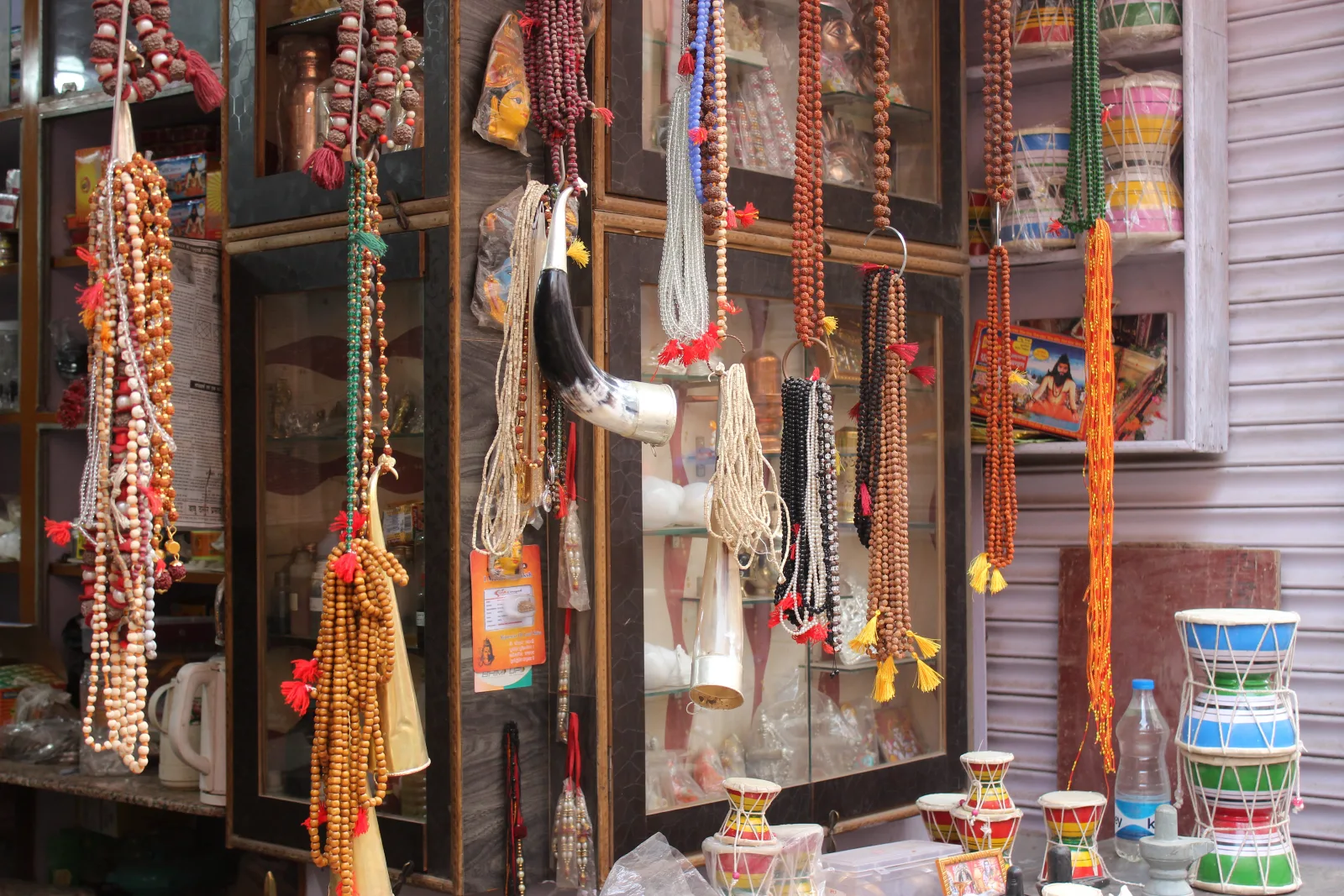
Current chapter pages mention holy materials for a prayer room, raksha or talismans. A provider may describe an object as prepared with mantra or ritual. That description belongs to religious belief unless there is independent evidence for a more concrete claim. A bead string can be counted and photographed; its supernatural protection cannot be guaranteed.
Ask what the object physically contains, who made it, whether anything touches skin or is consumed, how it should be stored, and the complete price including delivery. Do not ingest unidentified powders, herbs, metals or liquids. Keep items away from children and animals when their materials or small parts are unknown. A chapter about protection is not a reason to ignore a product-safety question.
Watch the shift from symbolic to absolute language. “This helps me remember my practice” is a personal meaning. “This prevents accidents, cures illness or guarantees a court victory” is a consequential claim without established support. Continue using locks, safe travel, healthcare, documentation and qualified advice.
Ownership should also be clear. Is the amount a sale price, ritual fee, suggested donation or refundable deposit? Will the same item be returned after a ceremony? Get the answer before sending money or irreplaceable personal objects.
Translate “enemies” without creating a target
Several Deeksha descriptions say mantras or objects may subdue enemies, overcome adversaries or reduce evil effects. Those phrases can intensify ordinary conflict into a story of hidden attack. Do not use a reading to accuse a colleague, relative, neighbour or partner of causing misfortune.
Start with observable facts: What happened? Who said or did what? Is there a message, transaction, threat, complaint or case number? Then choose the appropriate response—conversation, a boundary, workplace process, account security, legal advice or emergency help. If there is no evidence of a person causing harm, keep the spiritual interpretation from becoming an allegation.
Any instruction to threaten, stalk, shame, poison, restrain, financially exploit or otherwise harm another person is unacceptable. So is a promise to secretly control someone's choices. A non-harm boundary does not disrespect prayer; it distinguishes private devotion from conduct that violates another person's safety and consent.
For actual litigation, preserve deadlines and evidence. The legal-case guide explains why a predicted outcome or protective ritual cannot replace a lawyer, filing or order.
Keep sacred seriousness from becoming commercial urgency
Deeksha may feel too sacred to price-shop, but a paid service still needs transparent terms. Ask for a single written sheet listing the chapter reading, teaching, ceremony, materials, shipping, temple payment, teacher donation, recording and follow-up. Mark each item required, recommended or optional.
India's Central Consumer Protection Authority identifies practices such as false urgency, basket sneaking, confirm shaming, forced action and subscription traps as dark patterns in digital commerce. A spiritual checkout can create the same loss of choice: a countdown for divine timing, a pre-added ritual, “good devotees continue,” or access to the reading made conditional on buying an object.
Pause the payment when you hear
× “The protection window closes tonight”
× “Your family is exposed until you pay”
× “The chapter fee does not include the mandatory item” after purchase
× “Do not ask your family or another teacher”
× “A refund would anger the deity”
× “Borrow now; prosperity will repay it”
Save the advertisement, invoice and messages. The National Consumer Helpline provides a government grievance route for consumer disputes; threats or suspected crime may require the appropriate local authority. Spiritual language does not cancel ordinary consumer rights.
Worked example: Leela separates four decisions
Leela first pays only for translation of the available continuation bundle. She asks the reader to show which sentence refers to Deeksha and learns that the leaf recommends worship and mantra guidance but does not display the full chant.
That creates a second decision: whether to meet the proposed teacher. Before the meeting, she receives the teacher's lineage description, the practice outline and the complete fee. She asks her own family priest about compatibility with her existing practice. Nobody requires her to abandon it.
The teacher describes a public devotional chant and an optional mala; there is no formal initiation or vow. Leela already owns suitable beads, so she declines the purchase. She chooses a two-week practice that fits her health and caregiving schedule, then reviews whether it supports attention and devotion.
She does not claim the practice neutralised an enemy. A workplace conflict continues, so she documents the incidents and uses her organisation's grievance process. The spiritual practice and the factual response remain parallel, not substitutes.
This example is fictional, not a testimonial. Its point is the sequence: translate, verify the proposed teacher and scope, consent separately to any practice or item, and preserve a real-world response to real-world harm.
Green flags in a Deeksha conversation
- The reader distinguishes leaf wording from personal interpretation.
- The centre acknowledges that chapter numbering and contents vary.
- The proposed teacher's role and tradition are stated clearly.
- Mantra, initiation, object and remedy are priced separately.
- You may consult your own trusted teacher and take time.
- Health limitations, disability, family duties and existing commitments are respected.
- No person is identified as an enemy without evidence.
- No spiritual outcome, cure, victory or protection is guaranteed.
- You can decline without threat, shame or loss of the material already purchased.
The Nadi remedies guide offers a wider framework for voluntary, affordable practice. The reading-preparation guide helps preserve exact wording before emotion or later interpretation changes it.
Frequently asked questions
What is Deeksha Kandam in Nadi astrology?
Deeksha Kandam is commonly listed as a special chapter concerned with mantra upadesha, spiritual instruction and protective or prayer objects. Many centres number it Kandam 14, but chapter names and numbering vary. A service description does not guarantee that a matched bundle contains every advertised item.
Is Deeksha Kandam always Chapter 14?
No. Chapter 14 is a common modern listing, but some lists number or name the special chapters differently. Ask the centre for its complete written chapter list and the actual title visible in the matched material instead of treating one web list as universal.
Does reading Deeksha Kandam mean I have received initiation?
Not necessarily. Hearing a translation or recommendation is not automatically the same as entering a teacher–student relationship or receiving a tradition-specific initiation. Ask who is authorised to initiate, what consent and preparation are required, and whether the Nadi reader is translating, teaching or formally initiating.
Will the chapter give me a personal mantra?
Some providers describe the chapter as giving mantra upadesha or identifying sacred chants. Actual leaf content and lineage practice vary. Do not assume a mantra is uniquely yours merely because it was spoken in a paid session; preserve the source wording and ask whether it is public, tradition-specific or restricted.
Can a mantra or talisman guarantee protection?
No objective guarantee of protection, legal success, health or freedom from enemies can be made. A mantra, mala or raksha may have devotional meaning within a tradition, but it does not replace practical safety, medical care, legal help or evidence.
Is Deeksha Kandam the same as Shanti Kandam?
Usually not. Shanti Kandam is commonly described as discussing past-life causes and remedies, while Deeksha Kandam focuses on mantra instruction or protective practices. Gnana or Aushadha may appear as another special chapter. Lists overlap, so confirm the centre's definitions before paying.
Must I keep a mantra secret?
Secrecy rules depend on the tradition and teacher. Before agreeing, ask exactly what may not be shared, for how long and why. A secrecy request should not prevent you from discussing prices, coercion, unsafe instructions or harm with a trusted person or authority.
Can I decline a recommended initiation or object?
Yes. A spiritual recommendation does not remove your consent. You may pause, seek guidance from your own tradition, choose a simpler voluntary practice or decline entirely. A legitimate service should not threaten spiritual punishment, family harm or a failed leaf match because you say no.
How should Deeksha-related costs be disclosed?
Ask for separate written prices for the chapter translation, teacher consultation, initiation, materials, shipping, temple services and any recurring commitment. Reject pre-ticked additions, surprise upgrades and false urgency. The initial fee should not become permission for an open-ended spiritual bill.
What does NadiVedas charge for leaf finding?
₹999 covers Guruji's search for and live verification of the index leaf. A match is not guaranteed. If a leaf matches, the optional continuation-bundle reading starts from ₹9,800 and may include available topic chapters; continuing remains your choice.
How this guide was researched
Traditional chapter coverage was compared across current pages from Shiva Nadi Astrology, Sri Agathiya Mahasiva Nadi Jothidam and Vishwanadi Astrology. Their overlap establishes how providers currently describe the service, not whether the spiritual claims are objectively true.
- Shiva Nadi Astrology: current Kandam list
- Sri Agathiya Mahasiva Nadi Jothidam: Deeksha description
- Vishwanadi Astrology: special-chapter list
- Central Consumer Protection Authority: dark-pattern guidelines
- National Consumer Helpline
Pages were accessed 8 August 2026. Lineage practices differ; seek instruction from a teacher recognised within the tradition you intend to follow.
Find the index leaf before choosing a special chapter
₹999 covers Guruji's index-leaf search and live Google Meet verification. A match is not guaranteed. If a leaf matches, the separate continuation-bundle reading starts from ₹9,800 and may include available topic chapters. Continuing is always your decision.
Begin leaf finding for ₹999