
A thumb impression arrives as a small square of ink on paper. To the seeker it may look like an ordinary swirl. To a Nadi library, tradition says it is the first address in a very old catalogue—not the destination, not the prediction and not yet proof that a leaf has been found.
That distinction is the most important fact to understand before beginning. Online explanations often jump from “send your thumbprint” to “your destiny is written,” leaving out the careful middle: classification, bundle selection, leaf-by-leaf elimination and the possibility that no convincing match appears. This guide restores that middle.
In many Tamil Nadi traditions, a thumb impression narrows a large palm-leaf collection to candidate bundles. Men are commonly asked for the right thumb and women for the left, although library customs can vary. The print begins the search; the index leaf is recognised through a live sequence of personal statements answered with yes or no. This combination of classification and matching is what makes the Nadi leaf-finding journey distinct.
What does the thumb impression actually do?
Think of a conventional library. A catalogue number does not contain the whole book; it directs a librarian towards the shelf where the book might be. In the Nadi process, the thumb impression plays a similar practical role. A reader examines the dominant ridge pattern according to the classification system used by that manuscript library. That category points towards one or more bundles believed to contain records associated with people in the same class.
This is why “thumb-impression astrology” can be a misleading shorthand. The impression is not normally interpreted as a complete prediction. It is a sorting input for the leaf-finding stage. The fuller process is described in our complete guide to Nadi astrology, but the crucial sequence is simple: print, category, bundles, candidate leaves, live matching, and only then an optional reading.
A trustworthy explanation should also leave room for failure. A blurred print may not be classifiable. The relevant bundle may not be available in that collection. Candidate leaves may fail during verification. A search that concludes “not found” can be more credible than one that bends every answer until a leaf appears to fit.
The thumbprint narrows the search. Your answers test the candidate. Neither stage should be treated as a guaranteed result.
Which thumb is used—and why?
Many Tamil Nadi centres follow a familiar convention: the right thumb for men and the left thumb for women. You will see this rule repeated across practitioner websites and in seeker accounts. It is best understood as a traditional indexing custom within particular lineages, not a scientific fact about gender and not a claim that one hand is spiritually superior.
Libraries are not governed by one universal operating manual. Some may request both thumbs, use a different convention or ask for another finger when injury obscures the usual print. Follow the instructions of the centre that will actually search its archive. If their request differs from what you have read online, ask how their catalogue is organized rather than assuming one side must be wrong.
What about non-binary and transgender seekers?
A respectful provider should explain its archival convention without making personal judgements. Ask which print is most useful for that library’s indexing system; sending clear impressions of both thumbs may allow the reader to advise. The purpose is to navigate a catalogue, not to challenge anyone’s identity. If a provider handles the question insensitively, that is useful information before you entrust them with personal data.
What do “108 thumbprint types” mean?
Nadi practitioners often describe 108 primary thumb-impression categories, sometimes with 108 subdivisions. Names and methods may be taught within reading families or manuscript libraries. The number gives seekers an intuitive picture of the archive: one visible ridge pattern can reduce an enormous collection to a smaller path.
However, a careful account must state what is not publicly established. There is no single, openly documented taxonomy demonstrating that every Nadi library uses the same 108 labels in the same way. Nor is this traditional number part of the modern forensic classification standards used by fingerprint examiners. Websites that list a few Sanskrit or Tamil category names do not, by themselves, prove a complete universal system.
So how should a seeker interpret the claim? As a description of the lineage’s internal cataloguing tradition. Ask the provider whether classification is performed by the reader, a specialist searcher or software; whether an unclear print is rejected; and whether the same print would be searched again if no bundle matches. Concrete answers reveal more than a dramatic number.
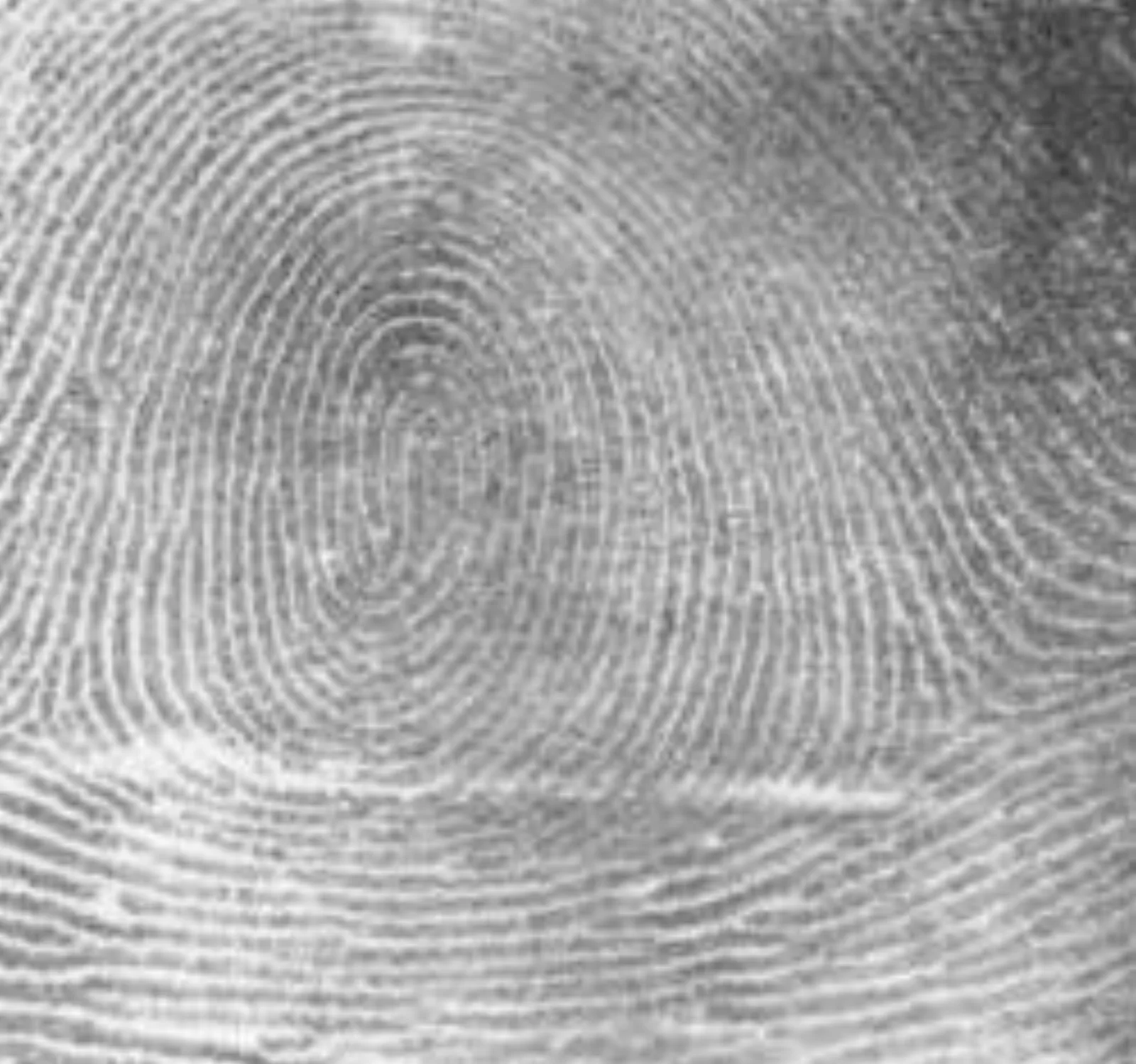

Traditional categories are not modern fingerprint science
Fingerprints are real anatomical patterns. Modern fingerprint systems broadly discuss arches, loops and whorls, then use finer ridge features for comparison. The US National Institute of Standards and Technology describes pattern classification as a way to divide records into groups so that searching can be more efficient. That idea—a visible pattern reducing a search space—helps us understand the practical logic of Nadi cataloguing.
But a useful analogy is not evidence that two systems are equivalent. Forensic fingerprint comparison asks whether impressions may come from the same source. Nadi leaf finding claims that a print category can direct a seeker towards a manuscript associated with their life. The first belongs to measurable biometric practice; the second belongs to a spiritual and divinatory tradition. One does not scientifically validate the other.
This boundary protects both clarity and faith. A seeker can approach a sacred practice with openness while still asking what has been documented, what is inherited belief and what is merely promotional language. “Ancient” should not be used as a substitute for evidence, and “scientific” should not be added to a claim simply because fingerprints are involved.
From one print to candidate palm-leaf bundles
After receiving a usable impression, the reader or library searcher assigns it to the archive’s relevant category. The collection is then checked for bundles indexed to that category and, depending on the centre, basic details such as gender and approximate birth year may help distinguish storage groups. This is the retrieval phase, not the final identification.
A bundle can contain dozens of narrow manuscript leaves. More than one bundle may need to be examined. Some centres describe selecting two or three likely bundles, but numbers vary with the library, lineage and state of the archive. Treat any exact bundle count as an explanation of that provider’s process, not a rule for all Nadi traditions.
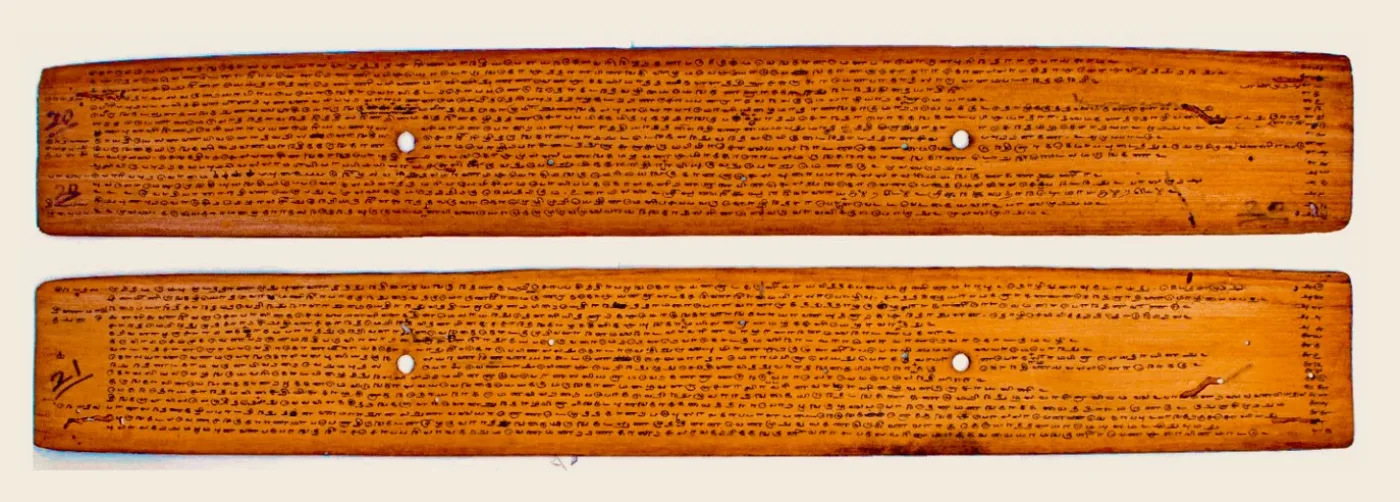
,_Languages_in_the_manuscript_Tamil_Telugu_Sanskrit,_Scripts_Grantha_Telugu_Tamil,_Hindu_Shaivism_monastery,_UVSL_589.jpg)
The searcher may prepare a sequence of candidate leaves for a scheduled call. That separation explains why leaf finding can take time even when the conversation happens online. The physical archive remains with the custodian; video is simply the bridge between the manuscript, reader, translator and seeker.
The live matching conversation is the real test
Classification gives a set of possibilities. Matching tries to eliminate them. The reader voices statements from a candidate leaf, often beginning with broad family and biographical markers. The seeker should be able to answer yes or no without first narrating their life. A “no” should move the search forward rather than invite pressure to reinterpret the question.
As a promising candidate continues, the details should become more specific: the seeker’s name or meaningful components of it, parents’ names, marital status and partner details where relevant, number of siblings or children, profession, and astrological birth markers may be tested. Not every library follows the same order, and translation can affect phrasing. What matters is cumulative consistency in one leaf—not a few generic statements scattered across several.
A simple example of clean elimination
Suppose the first candidate says the seeker is the eldest of three siblings. The answer is no. That leaf should be put aside. A second correctly indicates two siblings but gives an incompatible parental detail; it also fails. A third continues through several specific markers without requiring the seeker to volunteer them. The third may justify deeper verification. This example explains the method; it is not a claim that every session unfolds perfectly.
The traditional matching experience is clearest when the seeker does not send a long problem statement, family names or a complete birth chart beforehand. During the call, answer only the candidate statement being read. This gives the thumb-impression search and index-leaf details the space to reveal the match naturally.
How to make a clear thumb impression at home
A good image shows the central pad of the thumb, continuous ridges and enough contrast for the reader to see the overall pattern. You do not need forensic equipment. You do need restraint: too much ink creates a dark blob, while sideways movement smears the ridges.
- Clean and dry the thumb. Remove lotion, moisture and surface dust. If skin is extremely dry, wait after washing so fine cracks settle.
- Use a thin, even ink layer. A basic stamp pad is usually easier than liquid ink. Touch gently rather than pressing deep into the pad.
- Press straight down. Place the central thumb pad on plain white paper. Do not slide. Unless your centre explicitly asks for a rolled print, avoid rolling from nail edge to nail edge.
- Lift straight up. This preserves the ridge flow. Make three or four attempts with space between them.
- Choose the clearest sample. Ridges should look separated, not flooded. Include the entire print in the photograph.
- Photograph in soft daylight. Hold the camera parallel to the paper, focus on the ridges and avoid shadows, filters and WhatsApp markup over the print.
Thirty-second quality check
✓ Correct thumb according to the library
✓ Central pad fully visible
✓ Dark ridges separated by light spaces
✓ No sideways smear or heavy black patch
✓ Photograph sharp when zoomed
✓ No name, ID document or unrelated personal information in frame
If cuts or worn ridges obscure the print
Tell the centre before repeatedly pressing harder. A healing cut can create temporary breaks; manual work, age or skin conditions may reduce contrast. The reader may ask for another attempt, both thumbs or a different capture method. Do not let anyone claim that an imperfect print is a bad omen. It is a practical image-quality problem.
Privacy questions that strengthen trust
A fingerprint is personal data and deserves careful handling even when submitted for a spiritual service. Before sending it, ask who receives the file, where it is stored, whether it is shared with a third-party reader, how long it is retained and how deletion can be requested. A crop containing only the print is safer than a photograph that also exposes your address, ID number or other documents.
No website can authenticate every reader from a distance, but process transparency is observable. Look for a clear explanation of fees, refund conditions, what happens when no leaf is found, who conducts the call and whether the full reading is optional. NadiVedas’ own leaf-finding process separates search from the later reading decision; compare any provider against the same basic questions.
Choose a clear, respectful process
- The leaf search and its fee are explained before the session.
- Candidate statements are tested before the seeker shares a full life story.
- The conversation remains calm and free from pressure.
- Any continuation price is explained before the seeker decides.
- The centre is open about what happens when no candidate matches.
- Only information genuinely needed for booking and leaf finding is requested.
- The traditional role of the thumb impression is described accurately.
Traditional remedies may be offered after a reading in some lineages. They should never replace qualified medical, legal or financial advice, and consent should remain free of fear. An authentic spiritual experience does not require surrendering ordinary judgement.
Can thumb-impression leaf finding work online?
The communication can be online while the archive remains physical. A seeker sends a clear print, the library performs its search, and the reader later joins by video or audio for elimination. This can make the tradition accessible outside Tamil Nadu, but it does not remove the need for clear translation, visible process boundaries and informed payment.
Before booking, confirm the time zone, language, expected waiting period, whether the matching call is recorded, and who will translate. Ask whether a recording or written summary is included. Test your headphones and connection so “yes” and “no” answers are not lost. Keep a notebook, but do not search social media or feed clues to the reader during the match.
If a leaf appears to match, pause before choosing a lineage or full-reading depth. Learn how different Nadi traditions are presented, what chapters are included, how long the reading takes and what the later fee covers. A matched leaf creates an option, not an obligation.
For seekers who want to try the process, ₹999 covers Guruji's candidate-bundle search and live verification of the index leaf. Think of the index leaf as the first page of a book. The separate continuation bundle contains the future-prediction reading, starts from ₹9,800 and is paid only after a match if you choose to continue. Review the complete leaf-finding journey before paying.
Frequently asked questions
Which thumb impression is used for Nadi astrology?
Many Tamil Nadi centres traditionally request the right thumb from men and the left thumb from women. This is a lineage convention, not a scientific method of determining gender, and a particular library may give different instructions.
Why does a Nadi reader need a thumb impression?
The impression is used as a catalogue key to narrow a manuscript library to a smaller group of candidate bundles. It is not, by itself, the full reading and should not be presented as proof that a particular leaf belongs to you.
Are there really 108 thumbprint types in Nadi astrology?
Many practitioners describe 108 traditional categories and further subdivisions, but there is no single publicly documented, scientifically standardized taxonomy shared by every Nadi library. Treat the number as a tradition-specific claim rather than modern fingerprint science.
Can I send a phone photograph of my thumbprint?
Usually yes, if the reader accepts digital submissions and the image is sharp, evenly lit and shows the central ridge pattern without glare or blur. Follow that library's capture instructions and ask how the file will be stored and deleted.
Does a matching thumbprint guarantee that my leaf will be found?
No. The print only helps select likely bundles. A candidate leaf still needs to pass the live matching process, and a responsible search may end with no match.
What if my print is faint or unclear?
Clean and dry your thumb, use a thin even layer of ink, press the pad straight down without sliding, and try again on plain white paper. Cuts, very dry skin and heavy ink can hide ridge detail.
What information should I reveal during matching?
Give the minimum needed to answer the reader's statements, usually yes or no. Avoid supplying your full biography in advance. Ask how the centre separates the search stage from the later reading.
Why is a thumb impression used in Nadi astrology?
In the traditional process, the thumb impression helps classify the seeker into a manuscript-bundle category. It is the starting key for the leaf search; the personal match is then established through the identity statements read from candidate leaves.
From a clear print to an informed reading
Prepare for the live matching conversation, understand what comes after a match and compare an online session with an in-person visit.
Let the index leaf be tested before you choose the continuation.
₹999 covers finding and verifying the index leaf. The separate continuation-bundle reading contains the future-prediction material, starts from ₹9,800 and is payable only if a match is found and you choose to continue.
Begin index-leaf finding · ₹999