
Three seekers book “Bhrigu Nadi astrology.” One is asked for a thumb impression. One sends a birth chart. One visits a custodian who searches a collection of pre-written horoscopes. All three may hear the name of Sage Bhrigu, yet they have not purchased the same kind of reading.
This ambiguity is not a minor spelling problem. “Bhrigu Nadi,” “Bhrigu Nandi Nadi” and “Bhrigu Samhita” are often blended online, sometimes within a single page. A seeker who expects a live palm-leaf search may instead receive chart interpretation; a student looking for a teachable chart method may encounter a destiny-leaf service. The first act of informed consent is naming the method accurately.
Bhrigu Nadi astrology can mean at least three things: a palm-leaf or manuscript lineage attributed to Sage Bhrigu; a Bhrigu Samhita-style consultation that retrieves a pre-written horoscope record; or a chart-based predictive school, often called Bhrigu Nandi Nadi (BNN), that interprets planetary relationships and timing. These methods use different inputs. A leaf search may begin with a thumb impression, a Samhita consultation may index records through birth-chart details, and BNN normally derives a reading from a horoscope. Before booking, ask which tradition is being offered, what source is used and how the reading will unfold.
Three meanings hidden inside “Bhrigu Nadi”
1. Bhrigu-attributed palm-leaf reading
A centre claims custody of physical leaves associated with Bhrigu and may use a thumb impression plus yes-or-no candidate matching. The observable evidence is the search, leaf and translation—not the fame of the sage name.
2. Bhrigu Samhita consultation
A custodian or practitioner searches a body of pre-written horoscope records traditionally attributed to Bhrigu. Indexing may rely on chart details rather than a Tamil fingerprint bundle. The text, edition and retrieval method can vary.
3. Bhrigu Nandi Nadi chart method
An astrologer calculates or receives an ordinary horoscope, then applies a taught predictive framework involving planetary significations, connections and timing. No personal destiny leaf needs to be found.
Some practitioners acknowledge more than one stream. Others use “Bhrigu Nadi” as a broad marketing label. There is no reliable universal rule that converts the title on a webpage into the method in the session. Ask what inputs are required and watch how the result is produced.
Who is Sage Bhrigu in the tradition?
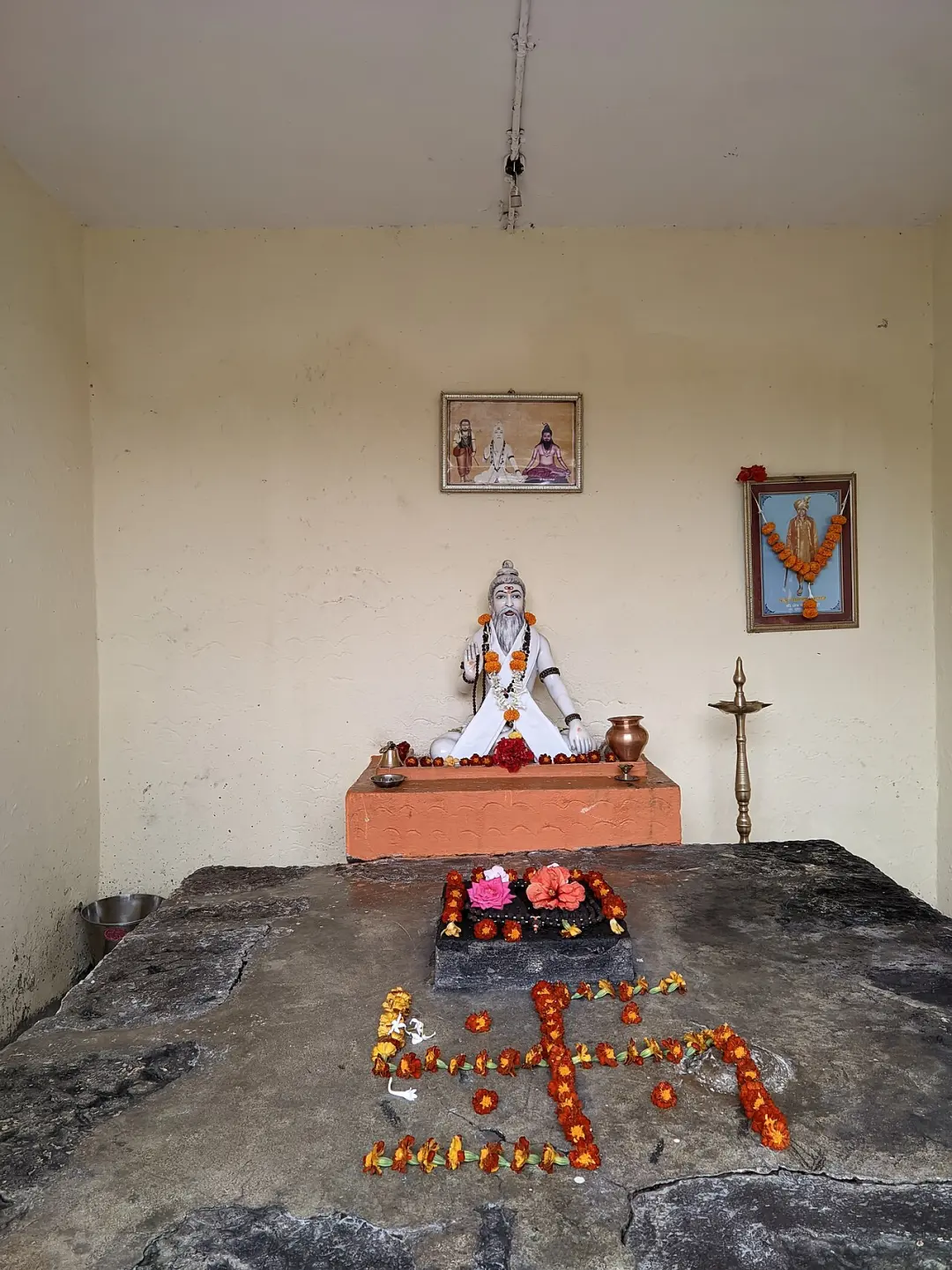
Bhrigu is a revered rishi in Hindu traditions and a namesake of the Bhargava lineage. Narratives associate him with sacred authority, the testing of gods and a stream of teachings carried by descendants and disciples. Astrological traditions later place the Bhrigu Samhita and predictive knowledge under his name.
That attribution gives a text or method religious pedigree, but it does not function like a modern author record. Works transmitted under the name of an ancient sage may combine teaching, commentary, recopying and later organisation. Establishing who wrote a particular surviving page requires provenance, palaeography, dating and comparison—not devotional reputation alone.
An official National Museum publication describes an illustrated Bhrigu Samhita manuscript and presents its traditional association with Bhrigu. This supports the existence of material and cultural traditions bearing the name. It does not show that every commercial “Bhrigu Nadi” service descends from that object or that personal predictions are accurate.

What is the Bhrigu Samhita?
“Samhita” can mean a collection or compendium. In astrological tradition, the Bhrigu Samhita is described as a vast repository of horoscopes and life readings attributed to Bhrigu and his disciples. Modern accounts often say that only portions survive and that custodians locate a record corresponding to a seeker's chart.
The phrase can create an image of one complete original book. Reality is harder to establish. Printed editions, manuscript holdings, family collections and services may not share identical contents. A text bearing the title may be a copy, selection, compilation or later publication. The age of an attributed teaching, the composition of a text and the date of a physical manuscript are separate questions.
A Samhita consultation is therefore best evaluated through specifics. What manuscript or edition is used? Where is it held? How is the relevant record indexed? Is the result looked up from a pre-existing entry, calculated from a horoscope or composed through interpretation? May the seeker see the source? Who translates it? What happens when no corresponding record is found?
Do not assume “Samhita” means palm leaf. Manuscripts across India use palm leaf, birch bark and paper, and surviving copies may be in different scripts or formats. An old-looking page does not establish title, content or provenance.
When Bhrigu Nadi means a palm-leaf search
Some centres offer Bhrigu Nadi within the same service structure used for Agastya and other Tamil Nadi lineages. The seeker supplies a thumb impression; the reader selects bundles; candidate statements about identity and family are tested; and a matched index leaf is translated before optional chapters are offered.
In that setting, the observable method matters more than the lineage label. A candidate leaf should be rejectable. The seeker should be able to answer yes, no or unclear without supplying a biography. Matching may end without a leaf. The centre should explain what ₹999 or any first fee covers, what data it retains and whether later chapters or remedies are separate purchases.
The thumb-impression guide explains bundle classification and live index-leaf matching. The authenticity guide explores manuscript heritage, sacred lineage and the seeker’s personal matching experience.
A Bhrigu attribution should not be retrofitted after the match merely because the seeker chose a Bhrigu service. Ask whether the collection was identified as Bhrigu before the search, what distinguishes it from an Agastya collection, and whether that distinction is documented, inherited or devotional.
When Bhrigu Nadi means Bhrigu Nandi Nadi
Bhrigu Nandi Nadi, usually shortened to BNN, is commonly taught as a chart-based predictive approach. A practitioner starts from planetary positions in a horoscope rather than retrieving an individual leaf. Contemporary schools often emphasise natural planetary significations, connections among planets and the use of transits or progression-like movement for event timing.
Descriptions of the rules vary. Some teachers centre Jupiter; some emphasise sign sequence, conjunctions, aspects or dispositors; some combine BNN with other Vedic astrology methods. “The R. G. Rao method” is a frequent modern lineage label. Students should ask which text, teacher and rule set a course follows instead of assuming every BNN practitioner uses identical technique.
A chart method can be written, taught and reapplied to the same horoscope, making its interpretive rules easier for a student to follow. Ask the practitioner to explain the planetary links and timing logic so the reading becomes a clear learning experience rather than an unexplained conclusion.
BNN is not automatically a leaf reading
If a practitioner asks for date, time and place of birth, generates a horoscope and explains planet-to-planet rules, you are receiving chart interpretation. There may be no ancient object, manuscript translation or thumbprint matching. Calling it “Nadi” places the method within an astrological stream; it does not turn the calculated chart into a personal palm leaf.
Identify the method in five minutes
- Ask what input starts the work. Thumb impression suggests a Tamil-style bundle search; birth details suggest a chart or Samhita index.
- Ask whether a physical source is read. If yes, request the material, script, collection and translation process. If no, ask which calculation and rule set produces the reading.
- Ask whether the result is retrieved or derived. Is a pre-written entry found, or does the practitioner interpret planetary positions during the session?
- Ask what failure looks like. Can the centre report “no leaf,” “no record,” “uncertain birth time” or “insufficient confidence”?
- Ask what the name guarantees. Does “Bhrigu” identify a documented collection, teaching lineage, modern school or brand?
Consider three short examples. Meera sends a thumbprint and rejects candidate family statements until one leaf fits: that is a leaf-matching service. Arjun supplies a horoscope and watches a teacher connect Jupiter, Saturn and Venus through a stated rule: that is chart-based BNN. Kavya visits a custodian who searches catalogued horoscope entries using birth data: that is presented as a Samhita retrieval. Similar predictions do not make the procedures identical.
How to evaluate a Bhrigu reading without overclaiming
For a leaf search, record every fact disclosed before matching, every candidate statement and every correction. For a Samhita retrieval, document the indexing method and the exact pre-written source shown. For chart-based BNN, preserve the birth data, chart and rules used so another trained practitioner could understand how the conclusion was reached.
Across all three, preserve past details, present descriptions and future guidance in their original wording. A recording helps the seeker return to specific statements, understand how the interpretation was formed and follow the reading’s unfolding themes over time.
Ask the practitioner to distinguish text, translation, calculation and counselling. A confident conclusion may rest on uncertain birth time, ambiguous manuscript language or an interpretive choice. Good practice makes the uncertainty visible rather than hiding it under the authority of Bhrigu's name.
What a clear Bhrigu Nadi experience includes
✓ The reading method is named and explained
✓ The source is shown or the chart logic is described
✓ The original wording and translation remain distinct
✓ Timing is explained in understandable language
✓ Continuation chapters are connected to the seeker’s priorities
✓ Remedies are explained through their spiritual purpose
✓ Fees and next steps are clear before continuing
Bhrigu Nadi and Agastya Nadi: compare process, not prestige
Agastya Nadi is strongly associated with South Indian and Tamil palm-leaf traditions. Bhrigu names appear across a wider mixture of northern Samhita narratives, palm-leaf services and chart-based techniques. That general pattern is useful, but providers may use labels differently.
Neither sage name ranks above the other as consumer evidence. Ask which collection is held, how it is indexed, which language is read, whether the method needs a chart, and what the first payment buys. A transparent Agastya leaf search is more assessable than a vague Bhrigu claim; a clearly taught BNN chart method is more assessable than a leaf whose source cannot be shown.
Within faith, the sage attribution may shape the meaning of the encounter. Within a transaction, clarity must come from the procedure. You can honour a sacred lineage and still insist that the service accurately describes what it does.
Frequently asked questions
What is Bhrigu Nadi astrology?
Bhrigu Nadi astrology is an ambiguous name. It may describe a palm-leaf lineage attributed to Sage Bhrigu, consultation with Bhrigu Samhita-style pre-written horoscope records, or a chart-based predictive method—often Bhrigu Nandi Nadi—using planetary relationships. Ask which method is meant before booking.
Is Bhrigu Nadi the same as Bhrigu Nandi Nadi?
Not necessarily. Bhrigu Nandi Nadi, commonly shortened to BNN, is generally taught as a birth-chart method associated with planetary significations, connections and timing. A service called Bhrigu Nadi may instead claim to search a physical manuscript or pre-written record. Providers sometimes shorten the names inconsistently.
Is Bhrigu Samhita a palm-leaf manuscript?
Bhrigu Samhita is the name of an astrological compendium traditionally attributed to Sage Bhrigu. Accounts and surviving editions vary, and not every modern service uses the same manuscript or retrieval process. Do not assume that every Bhrigu Samhita reading involves a Tamil palm leaf or thumb impression.
Does a Bhrigu Nadi reading require a thumb impression?
A Tamil-style palm-leaf search may request a thumb impression. A chart-based Bhrigu Nandi Nadi consultation normally starts from birth data and a horoscope, not a fingerprint. A Bhrigu Samhita custodian may use birth-chart details or another indexing method. The requested input is the quickest clue to the method.
What information is needed for Bhrigu Nandi Nadi?
A chart-based consultation generally requires date, time and place of birth, or a prepared horoscope. Requirements vary by practitioner. If the birth time is uncertain, ask how uncertainty affects the chart and whether the practitioner is making assumptions rather than treating the input as exact.
Who was Sage Bhrigu?
Bhrigu is a revered rishi in Hindu tradition and is associated with the Bhrigu or Bhargava lineage. Later astrological traditions attribute important predictive teachings and the Bhrigu Samhita to him. Sacred attribution should be distinguished from verified physical authorship of a particular surviving manuscript.
What makes Bhrigu Nadi astrology distinctive?
Bhrigu traditions connect the revered sage Bhrigu with records or interpretive methods that explore karma and life events. Bhrigu Nandi Nadi is especially known for reading planetary relationships and movement as a connected life narrative.
How is Bhrigu Nadi different from Agastya Nadi?
Agastya Nadi is commonly associated with South Indian and Tamil palm-leaf lineages attributed to Agastya. Bhrigu names appear in both northern Samhita traditions and chart-based schools, as well as some leaf services. The practical difference depends on the provider's actual input, text and method—not the sage name alone.
Can Bhrigu Nadi remedies be declined?
Yes. Prayer, charity, mantra, temple worship or rituals may be meaningful within the tradition, but they should remain voluntary, separately priced and free from threats. Spiritual remedies must not replace qualified medical, legal, financial or mental-health care.
What does NadiVedas mean by a Bhrigu Nadi leaf search?
NadiVedas uses the palm-leaf service context: ₹999 covers Guruji's search for and live verification of the index leaf. A match is not guaranteed. If a match is found, the separate continuation-bundle reading starts from ₹9,800, and continuing remains your decision.
Follow the evidence from lineage to method
Compare Agastya attribution, inspect how a palm-leaf match works and keep manuscript culture separate from predictive proof.
Begin by naming the service clearly
At NadiVedas, Bhrigu Nadi refers to the palm-leaf service context. ₹999 covers Guruji's index-leaf search and live Google Meet verification. A match is not guaranteed. If it matches, the separate continuation-bundle reading starts from ₹9,800—and continuing is always your decision.
Begin leaf finding for ₹999