
For forty minutes, Ananya answers no. The candidate has an elder brother; she is an only child. Another leaf describes a married seeker; she is single. The reader closes the bundle and says, “Your leaf is not here today.” Relief arrives first—at least the wrong leaf was not forced. Then the questions begin.
Does “not here” mean this bundle, this centre, this date or every collection? Was her thumb impression unclear? Should she wait, pay again, visit somewhere else or accept the result? A useful no-match conversation turns those questions into a bounded record instead of filling the uncertainty with fear.
A Nadi astrology leaf-not-found result means the current search did not identify an index leaf that aligned with the seeker in the available bundles. This is an honest outcome, not a failure of the seeker or the tradition. Confirm that the thumbprint was clear, understand which collection was searched and preserve your privacy. You may choose to pause or explore another collection later, but a patient non-match is always better than accepting a leaf that does not truly belong to your journey.
“Leaf not found” can describe six different outcomes
The phrase sounds final but often hides the actual stage. Before deciding what to do, identify which result occurred.
Six outcomes to separate
1. Print unusable: ridges were smudged, faint, cropped or obscured.
2. Classification uncertain: the reader could not assign the print confidently.
3. Search scope exhausted: the agreed bundles or session ended without a candidate.
4. Candidates rejected: leaves were read but key identity details failed.
5. Partial or ambiguous match: some details fit while material ones did not.
6. Record unavailable: the provider claims a relevant bundle is elsewhere, damaged, on loan or not catalogued.
The first two concern intake. Outcomes three and four are genuine no matches within a defined scope. Five requires disciplined refusal to reinterpret errors. Six is a claim about a collection and should be described with the evidence actually available.
Ask the provider to write one sentence: “No match was confirmed because…” A vague “not destined today” should not replace an operational result.
Keep traditional timing separate from observable process
Provider pages commonly say that a leaf appears when karmic timing is right, that the current date may be written into the text, or that the seeker should return after a particular interval. These statements belong to living Nadi belief. There is no independently established universal waiting period or success percentage.
A seeker may receive “the time is not right” as spiritual counsel. That belief becomes commercially risky when every failed attempt is used to sell another search, ritual or urgent payment. A claim that can explain both match and no match without a stated test cannot verify the search method.
Observable explanations are more modest: the print may be poor, the classification may differ, a centre may hold only part of a wider manuscript tradition, the paid session may have a finite scope, or every candidate checked may genuinely fail.
Do not infer bad karma, spiritual unworthiness, danger or divine rejection. A no-match is not a moral verdict. It needs no remedy.
A search result is always limited by a collection
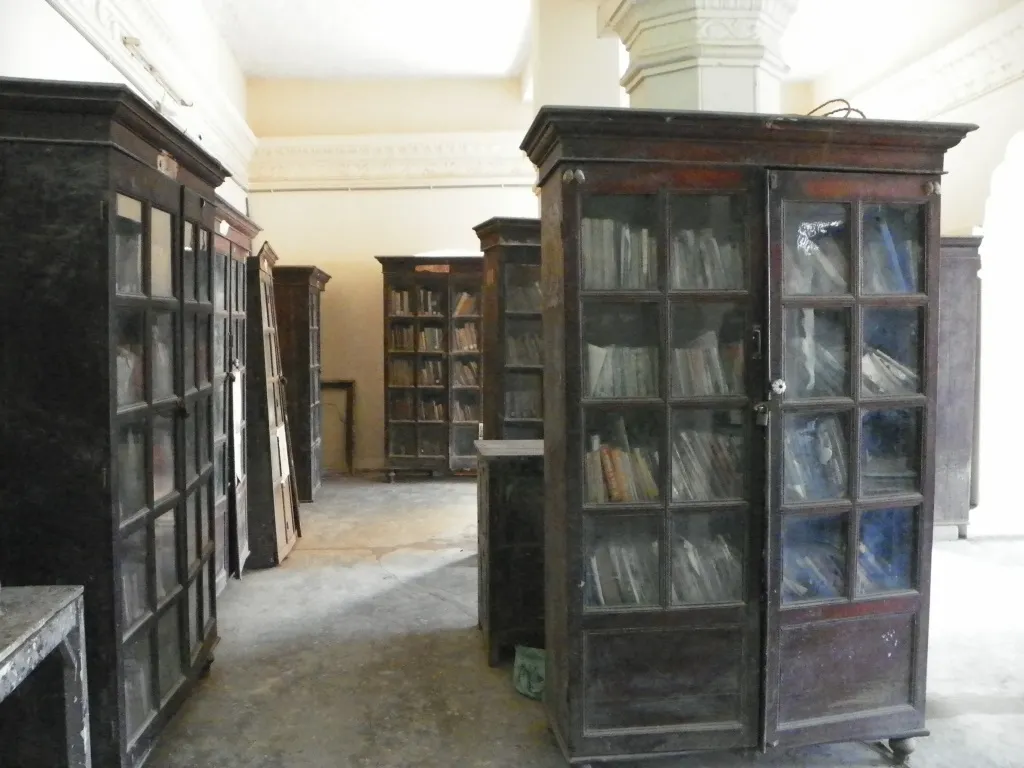
Palm-leaf manuscripts in India survive across institutional, monastic, temple and private custody. Government manuscript programmes document the practical work of cataloguing, conservation and access. Organic palm leaf can deteriorate through humidity, insects, dryness and handling. These established facts about manuscript culture make preservation and collection coverage real questions.
They do not prove that a particular seeker’s destiny leaf was once written, lost, damaged or moved. A provider who says “your leaf must be in another library” is making a case-specific inference unless a catalogue, bundle reference or transfer record supports it.
.jpg)
The Nadi history guide explains manuscript recopying, archives and the difference between documented material culture and sacred origin stories.
Make a clean search record before memory smooths the edges
Write the record immediately after the session. The goal is not to interrogate the reader or count every syllable. It is to preserve enough information to understand why the search stopped.
One-page no-match record
• date, centre, reader and translator
• online or in-person format
• thumb used and print method
• whether print quality was accepted
• classification name or code, if supplied
• personal details disclosed before questions
• bundles, leaves or session scope promised
• approximate candidate leaves tested
• key questions and exact yes/no answers
• reasons each near candidate failed
• stop point and provider’s stated outcome
• fee, refund, retry and data-retention terms
Do not record a failed candidate as “almost my leaf” merely because two facts fit. Common facts—marital status, broad occupation, sibling presence—can overlap among people. Note material contradictions as carefully as hits.
Our thumb-impression guide provides print-quality and information-flow safeguards for the matching session.
A partial match is not automatically a personal leaf
Matching can drift when a seeker wants the search to succeed. “No elder brother” becomes “an elder male influence”; a wrong occupation becomes a future career; an incorrect parent detail is blamed on translation. The candidate becomes harder to reject with every reinterpretation.
Define material details before the session: living parents, sibling count under an agreed definition, marital status, broad occupation and other facts the provider says the index leaf should confirm. If one of those is wrong, say no. Preserve uncertainty where family history or transliteration is genuinely unclear.
A reader may offer a spiritual interpretation of a partly resonant text. That can be received as a general reflection, but the service should not quietly relabel it as the confirmed personal leaf or unlock paid chapters on that basis.
No match is a mark of process integrity when the alternative is forcing a convenient leaf.
Agree on a stop rule before the first candidate
Without a stop rule, a search can end whenever time, patience or money runs out—or continue until the seeker supplies enough information to manufacture a fit. Define the boundary in terms the provider can honour.
A practical stop-rule script
“Please confirm what today’s fee covers: print review, classification, how many bundles or how much search time, the matching standard, what happens after rejected candidates, whether a second session is included and the written outcome if no candidate matches.”
There is no universal correct number of questions or bundles. A very long session can still leak information; a short session can be legitimate if the paid scope was narrow. Quality depends on stable criteria, honest rejection and transparent terms.
Stop if the reader asks you to ignore material errors, shifts from yes/no verification to collecting a biography, demands remedy payment to continue, or makes frightening claims before a leaf is confirmed.
Retry only when the next search is meaningfully different
Waiting two weeks, six weeks or six months is not an evidence-based universal rule. Ask what will change. A retry may make practical sense if the first print was unusable, another defined bundle becomes available, a different collection will be searched or a translation problem can be corrected.
A retry adds little when the same provider will repeat the same undefined scope with the same information already collected. Ask whether previous answers will be visible to the next reader. Clean comparison requires limiting prior disclosure, though a provider may retain records for operational reasons.
Trying another centre is an option, not an obligation. Compare method and cost first. Do not forward the first session recording, matching answers or family details before the second search. A different provider may use a different collection—or may offer a chart-based service under Nadi terminology.
Set a personal cap: one clearer-print retry, one genuinely different collection, or no retry at all. Stopping is a complete decision.
No-match terms belong in the quote, not after the result
Provider policies vary. Some retain a search fee because labour occurred; some refund all or part; some credit a later attempt; some charge only after a match. None of these arrangements should be assumed from the word “authentic.”
Before paying, identify the service stages: intake, search, live matching, reading, translation and continuation. Ask which amount is retained after no match, which is refundable, what event triggers it, the payment route, deadline and any administration or currency fee.
If the delivered service differs from the written agreement, preserve the quote, receipt, messages and session record and request a written resolution. Consumers in India can use the National Consumer Helpline for pre-litigation guidance and grievance registration. This is general consumer information, not legal advice.
The reading-cost guide includes a complete quote-comparison worksheet.
Close the data loop after no match
A thumb image, phone number, payment record and family answers may remain after the search ends. Ask what is stored, where, for how long, who can access it and whether it will be reused for another attempt. A claim that a print is “only for classification” does not answer the storage question.
Request deletion when retention is no longer necessary, subject to applicable requirements and the provider’s documented policy. Ask whether backups or shared reader copies follow a separate schedule. Do not send Aadhaar, passport, bank statements, medical files or relatives’ identity documents to prove that a candidate failed.
If you keep your own session record, protect it too. Redact thumbprints and relatives’ data before requesting advice or posting a review.
The online-reading guide explains consent, recording, payment and remote-data safeguards.
Let no match remain emotionally neutral
Some seekers feel disappointed after travel, anticipation or family pressure. Others feel relieved. Neither reaction proves what the result means spiritually. Give yourself time before booking again.
You can still use the questions that brought you to the reading. A career decision can be explored through skills and evidence; a relationship question through consent and conduct; anxiety through trusted support. The absence of a matched leaf does not suspend ordinary agency.
If the tradition matters to you, no match can be held as an unanswered ritual moment rather than a rejection. That interpretation should reduce pressure, not create debt, fear or compulsory remedies.
Frequently asked questions
What does Nadi astrology leaf not found mean?
It means the current search did not produce a candidate leaf that met the agreed matching standard. It does not establish that no relevant manuscript exists anywhere, that one must exist elsewhere, or that anything bad will happen. Ask what bundles and candidates were actually checked.
Does no leaf mean bad karma or spiritual rejection?
No established evidence supports that conclusion. Some practitioners interpret timing through karma or destiny as a traditional belief, but an unfound leaf is not a diagnosis, punishment or forecast. You do not owe a ritual or repeat payment to correct it.
Why might a Nadi leaf not be found?
Observable possibilities include an unclear thumb impression, uncertain classification, limited collection coverage, an incomplete search, rejected candidates, translation ambiguity, unavailable records or a genuine no-match within the searched scope. Claims about cosmic timing or a leaf elsewhere remain beliefs unless separately evidenced.
How many bundles should a reader search?
There is no independently established universal number. Ask the provider to define the paid search scope before starting: classification, bundles or sessions included, stop point, later attempts and no-match outcome. More questions or bundles do not automatically improve integrity if the matching rule keeps changing.
Should I accept a partially matching leaf?
Only if the match standard was defined beforehand and the remaining errors are documented. Do not turn a wrong parent, sibling, marital or identity detail into a metaphor merely to preserve a match. Partial resonance can be meaningful without being labelled a confirmed personal leaf.
Can I try another Nadi centre?
Yes, if you still want to and understand the new cost, data and scope. A different centre may hold a different collection or use a different method, but success is not guaranteed. Avoid forwarding the first centre’s questions and answers before the second matching session.
How long should I wait before trying again?
No universal evidence-based waiting period exists. Providers publish different intervals and spiritual explanations. Decide using practical factors: whether a clearer print is needed, whether new bundles will actually be searched, whether terms changed and whether another attempt remains worth your time and money.
Do I get a refund if no Nadi leaf is found?
That depends on the written agreement. Search labour, matching, reading and continuation may be separate services. Confirm before payment which fee is retained, refunded or credited, the trigger and timeline, and any processing deduction. Preserve the quote and payment record.
What happens to my thumb impression after no match?
Ask whether it is deleted, retained for a defined retry, shared with another reader or stored with your contact details. Request deletion when continued storage is unnecessary, subject to applicable obligations. Never send identity documents or family history merely to close a failed search.
What does the NadiVedas ₹999 fee cover if no leaf matches?
₹999 covers Guruji’s index-leaf search and live Google Meet verification. It pays for the search and does not guarantee a match. The optional continuation-bundle reading, starting from ₹9,800, is offered only after a match and remains your choice.
Connect no match with search quality, cost and evidence
Improve the thumbprint input, define the paid search and keep authenticity claims within their evidence.
Search with a real possibility of no match
₹999 covers Guruji’s index-leaf search and live Google Meet verification. It pays for the search; a match is not guaranteed. If a leaf matches, the separate continuation-bundle reading starts from ₹9,800 and may include available topic chapters. Continuing is always your decision.
Begin leaf finding for ₹999