
Meera hears a sentence she did not expect: in another birth, the reader says, she withheld property from a younger sister. Meera has a strained relationship with her sister now. The story feels uncannily precise, and for a moment emotion turns resemblance into certainty. Should she confess to something she cannot remember? Pay for an urgent remedy? Tell her family that an ancient leaf has explained everything?
A past-life story can be spiritually meaningful without becoming a recovered fact. The responsible task is to protect both possibilities: the seeker's right to hold a sacred belief and everyone else's right not to be blamed, diagnosed or confronted on the basis of an unverifiable narrative. That distinction is the heart of a careful Nadi astrology past life reading.
A Nadi astrology past-life reading traditionally describes actions from an earlier birth, their karmic influence in the present and possible acts of Shanti or reconciliation. In many palm-leaf traditions it is associated with Kandam 13 after the index leaf has matched. The chapter may name a former place, role, family situation, actions and remedies. Preserve the exact wording and receive the story as sacred karmic guidance that supports reflection, forgiveness and responsible present-day choices.
What Kandam 13 is said to contain
Many contemporary Tamil Nadi services organise subjects into twelve general life chapters and four special chapters. Kandam 13 is commonly called Shanti Kandam. Current descriptions associate it with previous-birth actions, the difficulties those actions are believed to create now and forms of pariharam intended to reduce their effect. “Shanti” carries the sense of peace or pacification; it should not be translated automatically as proof that a cosmic debt has been found.
A reading may name a region, occupation, social role, family relationship, gift, neglect or wrongdoing. It may link that account to recurring conflict, delay, illness, money problems or spiritual unease. Some readers offer a short theme; others deliver a detailed biography. Content and numbering vary by lineage, archive and centre. A page advertising an exhaustive list does not establish what is written on a seeker's matched bundle.
Kandam 13 also should not blur into every remedy offered during a reading. Kandam 14 is usually described separately as Deeksha, mantra, initiation or protective practice. Ask which physical leaf is being shown, whether its colophon or bundle identifier connects it with the index leaf, and why the reader assigns it that chapter number. The guide to all 16 Kandams maps the common system and its variations.
Within tradition, the reading can be understood as moral or devotional counsel. Outside that belief framework, it remains an interpretation whose historical claims require ordinary evidence. Respect does not require collapsing those categories.
Four experiences are often given the same name
The phrase “past life reading” can describe practices that begin with entirely different inputs. A Tamil palm-leaf service claims to locate a pre-written record through thumb-impression classification and candidate-leaf matching. A chart astrologer calculates from birth time, date and place. A calculator converts birth details into a generic result. A regression practitioner uses hypnosis, relaxation or guided imagery to invite scenes and identities.
Name the method before evaluating the result
Palm leaf: What manuscript was matched and translated?
Birth chart: Which planetary rule produced the conclusion?
Calculator: Is the result fixed for everyone with the same inputs?
Regression: Which prompts or suggestions shaped the imagery?
One method cannot borrow credibility from another. A real old manuscript demonstrates manuscript culture, not the truth of a personalised prediction. A rule-based chart can be explained consistently without proving reincarnation. A vivid image under hypnosis can feel autobiographical without being a reliable memory. If a provider moves silently between these sources, the seeker cannot tell what is being evaluated.
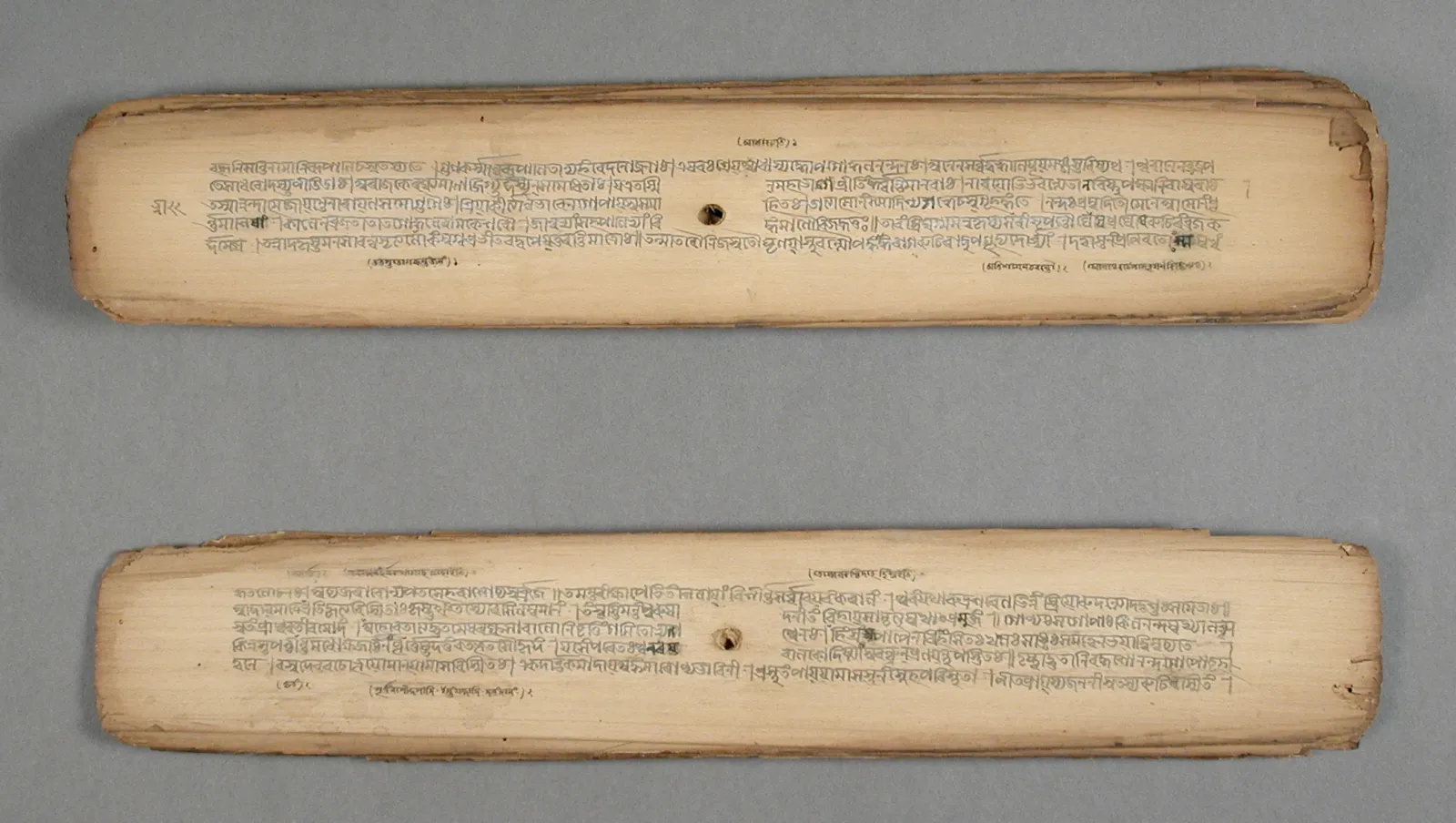
A genuine palm-leaf process begins with the index-leaf search, and sometimes the correct leaf is not found in the bundles available that day. The thumb-impression matching guide explains how classification, candidate leaves and brief yes-or-no answers lead toward a personal match.
Give every striking claim a provenance card
Specific details make a reading easier to remember and revisit. During matching, answer each candidate statement briefly and allow unsuitable leaves to be set aside. Once the index leaf matches, preserve the Tamil recitation, translation and key details together so the guidance remains clear in its original context.
For each important claim, write four lines: the exact source phrase, the literal translation, the reader's explanatory expansion and the facts disclosed before it appeared. Then add a fifth line: what independent evidence could confirm or contradict it? “You were connected with water” is too elastic to test. A named village, occupation and dated event are more testable, but even a real historical match does not by itself prove personal identity across births.
A five-line narrative record
1. Leaf wording as closely as possible
2. Literal translation and uncertain terms
3. Reader's interpretation, clearly labelled
4. Prior disclosures and candidate answers
5. External verification: possible, failed or unavailable
This record protects a reading from both automatic belief and automatic dismissal. It lets a Tamil speaker review the translation, shows whether specificity arose before or after feedback and prevents the retelling from becoming more definite each time. Our authenticity and evidence guide offers a fuller verification framework.
_Manuscript_LACMA_M.88.134.4_(1_of_2).jpg)
A leaf narrative is not recovered memory
Reading a translation is not the same process as remembering an event. Yet a compelling story can seed images, dreams and feelings that later seem familiar. Repetition, leading questions and other people's details can increase confidence without increasing accuracy. Human memory is reconstructive; conviction alone does not establish where an image came from.
The boundary becomes especially important when regression or hypnosis is added. Published psychological research has shown that suggestion can shape purported past-life identities, and clinical literature warns that guided imagery and hypnosis can help create false memories. Past-life regression is not an evidence-based method for establishing historical events. A practitioner should never promise to “recover the proof” hidden behind a leaf statement.
Do not use a session to identify an alleged murderer, abuser, spouse, child or debtor. Do not report a living person to authorities, contact a bereaved family or publish someone's name because it appeared in imagery. If the story awakens trauma symptoms, panic, dissociation or intrusive thoughts, pause spiritual work and seek a licensed mental-health professional who will not reinforce unverified memories as facts.
A safe reader allows “I do not know” to remain a complete answer. They do not intensify uncertainty until it becomes a dramatic memory.
Understand karma without turning suffering into blame
Karma and rebirth have long histories in Indian religious and philosophical traditions. Many Hindu, Buddhist and Jain accounts connect intentional action, consequence and repeated existence, though they do not all define the self, moral causation or liberation in the same way. Indian thought is not monolithic: classical materialist Cārvāka positions rejected karma and rebirth. A respectful explanation should make room for diversity rather than presenting one modern service script as India's single established fact.
In consultation, karmic language becomes harmful when it turns misfortune into a verdict. Cancer is not proof of cruelty in another birth. Infertility is not punishment. Disability is not spiritual inferiority. Poverty is not evidence of laziness, and surviving abuse does not show that a victim “owed” the perpetrator. Such claims cannot be tested, can deepen shame and may distract from present causes that people can address.
Karma also must not excuse current wrongdoing. If someone harms Meera today, a past-life account does not reduce their responsibility or her right to safety. If a workplace withholds wages, the remedy begins with fair payment and appropriate recourse, not a ritual demanded from the underpaid worker.
A more humane spiritual reading asks, “What quality can I practise now?” It does not answer, “Who deserves what happened?”
Turn the theme into a present-life action
Return to Meera's story about denying property to a sister. She cannot confirm the proposed former life, and she should not tell her sister that their conflict has been cosmically diagnosed. She can still inspect the present: Have decisions been fair? Is money discussed openly? Is an apology due for something that actually happened? Would clearer boundaries help?
This is a useful translation rule: keep the story conditional and make the action observable. “If this narrative points toward unfairness, I will review my current agreements.” “If it points toward neglected care, I will call someone who welcomes contact.” “If it points toward greed, I will make one transparent donation within my budget.” The value does not depend on proving the biography.
- Name the theme. Choose a plain word such as honesty, repair, grief, restraint or service.
- Check present evidence. Identify an actual relationship, habit or obligation—not a stranger who resembles the story.
- Choose a proportionate act. Prefer consent, fairness and concrete help over spectacle.
- Set a boundary. Do not spend beyond a fixed budget or surrender health and legal decisions.
- Review the effect. Did the action reduce harm or improve conduct? If not, change it.
This approach permits reverence while keeping moral agency in the life the seeker can actually observe.
How to evaluate Shanti and pariharam
Kandam 13 remedies may include temple worship, prayer, mantra, food donation, support for a particular group, feeding animals, clothing gifts or acts tied to a sacred place. Within belief, the practice may express repentance, gratitude or a wish for peace. It should be described honestly as spiritual observance, not as a guaranteed mechanism.
Ask for the exact instruction, symbolic purpose, complete cost, recipient and whether a simpler form is acceptable. Separate the reading fee from any remedy. A reader should not frighten a seeker with an expiring deadline, insist that only their intermediary can perform the act or claim that refusal will harm a child or partner. Charity should benefit its recipient, not merely function as a hidden commission.
Choose practices that are lawful, physically safe and compatible with medical care. Avoid unknown substances, fasting that conflicts with health needs, unsafe fire rituals or travel undertaken under pressure. Never transfer money, property or legal authority because a past-life story says a debt must be repaid. The Nadi remedies guide provides a detailed cost, consent and safety checklist.
How to keep the experience calm and meaningful
Stop or seek a second opinion when you hear
× “Your suffering proves you sinned before”
× “This person harmed you in another birth”
× “Only an immediate payment can remove the curse”
× “Do not tell your doctor, lawyer or family”
× “Regression will recover an accurate memory”
× “The remedy guarantees marriage, fertility or healing”
× “No match is impossible; everyone has a leaf here”
× “I cannot show or replay the source wording”
× “You must contact the family from your former life”
× “Doubt itself will make the karma worse”
A trustworthy consultation can tolerate uncertainty, independent translation, a spending limit and the seeker's decision to stop. Before booking, use the reading preparation checklist to protect privacy and record what was known in advance.
Frequently asked questions
What is a Nadi astrology past life reading?
It is a traditional spiritual interpretation said to connect actions in an earlier birth with patterns in the seeker's present life. In many palm-leaf services, the special Shanti Kandam or Kandam 13 is associated with previous-birth karma and remedies. The narrative is a matter of religious belief, not a scientifically verified memory or biography.
Which Nadi chapter describes a past life?
Kandam 13 is commonly called the Shanti or past-birth-karma chapter. Lists vary between centres and lineages, so ask what the matched bundle actually contains. Kandam 14 is more often associated with mantra, initiation or spiritual protection and should not be silently substituted.
What can a Nadi leaf reveal about a previous birth?
Within Nadi tradition, a past-life chapter may describe an earlier identity, place, duty or karmic pattern whose influence is believed to continue into the present. Receive these details as sacred guidance, preserve the reader’s exact words and reflect on how the message can support wiser choices now.
Is a palm-leaf past life reading the same as regression therapy?
No. A palm-leaf reading claims to translate a written record, while past-life regression uses hypnosis or guided imagery. Psychological research warns that suggestion can produce confident but false memories. Neither method should be used to create factual accusations or replace qualified mental-health care.
What does karma mean in this kind of reading?
Within many Indian traditions, karma links intentional action and consequence across lives. Indian philosophy is diverse, however, and not every school accepts rebirth. In a consultation, ask whether karma is being presented as scripture, interpretation, metaphor or a factual claim.
Does suffering prove that I did something wrong in a past life?
No. Illness, abuse, poverty, infertility, disability and grief are not evidence of previous wrongdoing. A reading should never blame a victim, excuse a perpetrator or discourage attention to present medical, social, legal and practical causes.
Should I contact someone named in a past-life story?
Not on the story alone. Do not confront, accuse or intrude on a person or family because they resemble a name, place or relationship in a reading. Treat living people's privacy and safety as more important than completing a spiritual narrative.
Are Kandam 13 remedies compulsory?
No. Prayer, charity, temple worship or other pariharam may be meaningful within tradition, but participation and spending must be voluntary. Ask for the complete purpose and price, refuse urgency or threats, and never substitute a remedy for medical, legal or mental-health support.
How can I use a past-life reading constructively?
Translate the theme into a present-life value without declaring the story factual. A narrative about unpaid labour might prompt fair dealing today; one about estrangement might prompt a safe conversation or boundary. Choose actions that help living people and can be evaluated in the present.
What does the ₹999 NadiVedas fee include?
₹999 covers Guruji's index-leaf search and live verification. A match is not guaranteed. If a leaf matches, the optional continuation-bundle reading starts from ₹9,800 and may include available special chapters. Continuing remains your choice.
Verify the process before interpreting the story
Understand the special chapters, document how a leaf was matched and keep remedies voluntary, transparent and proportionate.
Find the index leaf before requesting Kandam 13
₹999 covers Guruji's index-leaf search and live Google Meet verification. A match is not guaranteed. If a leaf matches, the separate continuation-bundle reading starts from ₹9,800 and may include available special chapters. Continuing is always your decision.
Begin leaf finding for ₹999