At dawn, Palani Hill rises above the Tamil town in steps of green and stone. Pilgrims climb toward Murugan’s sanctuary; somewhere inside the living tradition, another name keeps returning: Bhogar. He is remembered as a Siddhar, traveller, yogi, alchemist and maker of the sacred image. Then a seeker encounters “Bhogar Nadi astrology” online and a new question appears. Does the devotional story authenticate a personal palm leaf?
The honest answer is more interesting than a simple yes. Bhogar belongs to an identifiable Tamil Siddha literary and devotional world. Official Siddha literature catalogues list numerous works under Bogar’s name. Palani preserves traditions connected with him. Modern Nadi centres also use his name for predictive leaf collections. Those facts can coexist, but each needs its own evidence. A sacred association is not automatically a chain of custody for a leaf offered today.
Bhogar Nadi astrology, also searched as Bogar or Boganathar Nadi, is the name used for modern palm-leaf reading traditions attributed to the Tamil Siddhar Bhogar. Providers commonly associate it with karma, healing, alchemy, spiritual practice, obstacles and remedies, alongside family, work and relationship predictions. Bhogar’s importance in Siddha tradition and the existence of texts attributed to him are documented; the age, authorship and predictive accuracy of a particular personal leaf require separate verification. Judge the actual matching process, manuscript claim, translation, privacy terms, cost and freedom to reject a mismatch.
Who is Bhogar—or Bogar or Boganathar?
Bhogar is revered among the Tamil Siddhars: poet-practitioners remembered for yoga, medicine, philosophy, disciplined experimentation and the search for transformation. English spellings vary because Tamil sounds can be transliterated in different ways. “Bogar,” “Bhogar” and the honorific “Boganathar” usually point to the same traditional figure.
Devotional biographies give him teachers, disciples, extraordinary journeys and very long spans of life. Some tell of travel to China and identify him with figures from other cultures. These narratives matter to believers and to the history of how communities remember Bhogar, but they are not all established biography. It is therefore important to receive them as sacred tradition without presenting every detail as a dated historical fact.
What can be said carefully? Bhogar is a prominent attributed author in Tamil Siddha literature; Palani communities preserve a strong ritual association with him; and his name remains active in religious, medical and Nadi contexts. His exact historical dates, the authorship history of every text bearing his name and the literal details of his travels remain questions for manuscript and historical study.
Palani, Murugan and the navapashanam tradition
Bhogar’s most visible sacred geography is Palani, one of Tamil Nadu’s celebrated Murugan pilgrimage centres. Temple tradition associates him with the hill, a shrine or samadhi area, and the making of the principal Murugan image from navapashanam—literally “nine poisons” or substances combined through esoteric knowledge. Devotional accounts understand the image and ritual liquids associated with it as spiritually and medicinally potent.
This is best stated as temple and Siddha tradition. A photograph can establish that Palani Hill Temple exists. A temple narrative can establish what a community transmits. Neither independently establishes the chemical composition of an image, universal curative power, or authorship of a modern predictive manuscript. Claims that a substance cures every disease require clinical evidence and must never be inferred from religious reverence.
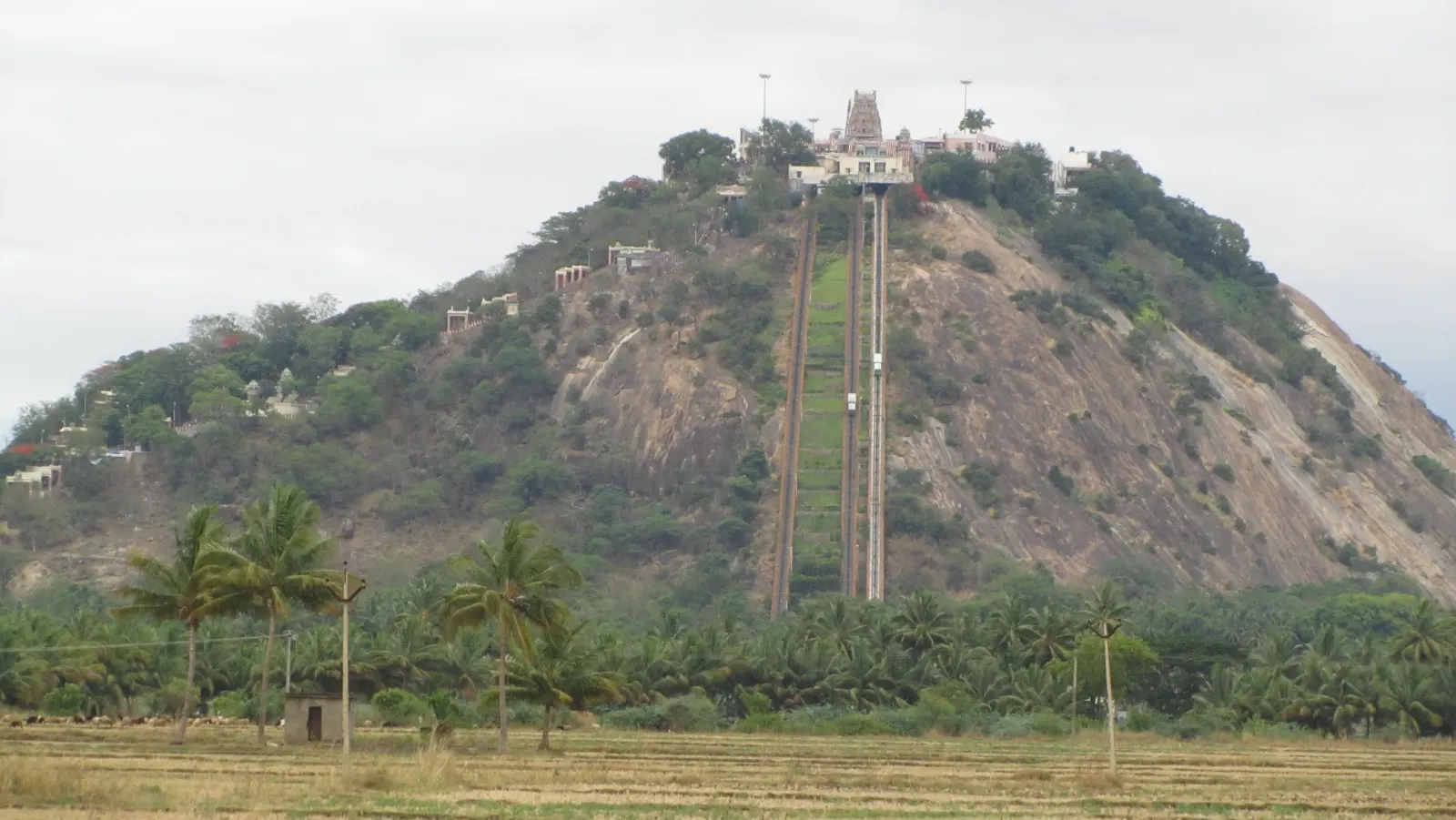

For a seeker, Palani adds cultural context, not automatic provenance. A centre elsewhere may sincerely preserve a collection called Bhogar Nadi, but the name of the hill does not trace how that leaf moved, when it was copied, or who read its script. Ask for that information directly.
Bhogar’s attributed texts: real catalogue evidence, limited conclusions
The National Institute of Siddha’s authorized-list catalogues are valuable because they demonstrate that many printed and manuscript titles have circulated under Bogar’s name. Entries include Bogar 7000, Bogar Vaidyam, Bogar Gnanam, Bogar Kandam, works on yoga, materia medica and related subjects, and editions held or issued by named libraries and committees. These catalogue records provide a more precise foundation for discussing the attributed literature.
Catalogue entries help trace how Bhogar-attributed works appear in recorded collections and publication history. Like many South Asian textual traditions, these works have also been preserved through copying, compilation and commentary across generations. That layered transmission is part of the living manuscript heritage surrounding Bhogar’s name.
Do not collapse these five names into one claim
1. Sacred figure: Bhogar in Siddha and Palani devotion.
2. Attributed literature: works catalogued under Bogar or Boganathar.
3. Physical manuscript: a particular bundle with material, script and copying history.
4. Modern collection label: a centre calls that bundle “Bhogar Nadi.”
5. Personal match: one leaf is said to describe one seeker.
Each step needs its own support. Catalogue evidence for step two does not automatically prove steps three through five. This layered view protects both scholarship and faith: it takes the literature seriously without asking it to prove more than it can.
What modern Bhogar Nadi readings are said to cover
Contemporary Bhogar Nadi traditions commonly discuss transformation, karmic obstacles, health, longevity, spiritual discipline, planetary difficulties and remedies. Some connect Bhogar’s alchemical reputation with “inner alchemy”—the refinement of conduct, breath, attention and awareness. Others include the familiar Nadi concerns of parents, siblings, education, marriage, children, career, property, debt and future periods.
Because descriptions vary, “Bhogar Nadi” should not be assumed to have one universally catalogued contents list. The name may identify an attributed manuscript family, a reader lineage, a specialist chapter or a house tradition. Before booking, ask what the name means in that particular service. Does the centre show the leaf? Which script and language are claimed? Is Bhogar named on the manuscript, in a colophon, in an inherited catalogue, or only in the centre’s description?
Compare this with Thirumoolar Nadi, which providers often describe through yoga and liberation, and Agastya Nadi, commonly presented as a broad life-reading lineage. Such profiles can help navigation, but they are not a fixed ancient taxonomy. Compare procedures and evidence rather than assuming every website means the same thing by a sage’s name.
How a Bhogar Nadi leaf search usually works
The observable process described by providers is generally the familiar Tamil thumb-impression search, not a Bhogar-only technique. A photographed or inked thumbprint is classified according to the centre’s ridge-pattern system. The reader selects candidate bundles and presents identifying statements. The seeker answers yes, no or unclear until a leaf is declared matched, or the available search ends without a match.
- Consent: confirm which thumb is needed, why it is collected, who can access it and when it will be deleted.
- Search terms: agree on the search-only price, session language, recording policy and valid non-match outcome.
- Candidate testing: answer briefly; do not volunteer a biography to help the reader.
- Source separation: ask what is visibly read, what is translated and what is the practitioner’s interpretation.
- Decision: accept, reject or pause without pressure. Additional Kandams and remedies are separate purchases.
Read the thumb-impression matching guide before sending biometric data. If nothing fits, use the leaf-not-found guide rather than allowing endless reinterpretation. A trustworthy search must permit a clean “no leaf found.”
A revered attribution can deepen the meaning of a reading. It cannot remove the need for a rejectable match.
Health, alchemy and remedies: where extra care is essential
Bhogar’s association with Siddha medicine and alchemy gives this topic unusual safety stakes. A reader may recommend prayer, temple worship, charity, mantra, dietary discipline or a Siddha preparation. Reflective or devotional practices can be meaningful when freely chosen. A prediction, however, is not a diagnosis, and a manuscript attribution does not establish that a substance is safe for a particular person.
Never consume an unidentified herbal, mineral or metal product. Ask for its exact name, ingredients, manufacturer, batch, dose and qualified prescriber. Check interactions with a licensed clinician or pharmacist, especially during pregnancy, for children, or with liver, kidney, heart or psychiatric conditions. Do not stop prescribed treatment because a reading promises a cure. The Aushadha Kandam safety guide explains a practical ingredient-and-interaction review.
Ritual remedies also need consent and price clarity. Ask what is optional, who performs it, the complete cost and whether a simple act of prayer or charity is acceptable. Fear-based statements—“pay now or the danger will occur”—are a reason to pause. Use the remedies guide to keep devotion separate from coercion, debt and medical delay.
A grounded example
Suppose a reading says a seeker has a “heat imbalance” and should take a special preparation. The safe response is not instant acceptance or ridicule. Record the exact traditional statement, ask whether it is manuscript text or reader advice, and take any symptoms to a qualified clinician. If considering a regulated Siddha product, disclose every ingredient and current medicine. Spiritual meaning can remain while healthcare evidence leads the health decision.
The five-layer verification test before you book
Ask before sharing your thumbprint
✓ What exactly does “Bhogar” identify here: author, collection, lineage or reading style?
✓ Can you state the manuscript’s script, language and known copying history?
✓ What information do you collect before candidate matching?
✓ May I see the leaf and hear the source read before translation?
✓ Does ₹999 cover only search and live verification?
✓ What happens when no candidate matches?
✓ Are chapters, remedies and medicines completely optional?
✓ How and when will my thumbprint and recording be deleted?
During the session, keep a disclosure log. Write down what the provider already knew, each candidate statement, your exact answer and any detail you volunteered. Separate specific hits from flexible statements. Ask the reader not to turn every “no” into a metaphor or future event. Afterward, divide the record into past facts, present descriptions and future claims; evaluate each on its own terms.
Taken together, spelling clarity, public catalogue evidence, the five-layer provenance model, an explicit non-match path, biometric questions and medical-alchemy safeguards offer a grounded way to approach the tradition. The Palani photograph is likewise presented as sacred geographical context, not as visual proof of a prediction.
NadiVedas has a separate Bhogar Nadi tradition page describing the offered journey. It should be read as a service introduction, not independent authentication of ancient authorship or guaranteed accuracy. No ethical provider can promise a leaf match, a future event or a medical result.
Frequently asked questions
Who was Bhogar?
Bhogar—also written Bogar or Boganathar—is revered in Tamil Siddha tradition as a yogi, poet and practitioner associated with medicine and alchemy. Devotional traditions connect him strongly with Palani and Murugan. His exact dates and many biographical details are not historically settled.
Are Bhogar, Bogar and Boganathar the same name?
They are common English transliterations used for the Tamil name போகர் and its honorific forms. The spelling varies among books, catalogues and lineages, but the different forms generally refer to the same revered Siddhar.
What is Bhogar Nadi astrology?
It is a modern name for palm-leaf collections or reading lineages attributed to Bhogar. Providers often emphasize transformation, health, karma, spiritual discipline and remedies, but there is no single public catalogue that standardizes every Bhogar-labelled collection.
Is Bhogar Nadi the same as Bogar 7000?
No. Bogar 7000 is the title of a work attributed to Bogar in Siddha literature catalogues. A modern personal predictive leaf called Bhogar Nadi is a different claim. Evidence that the title exists does not authenticate a particular leaf or prediction.
What is Bhogar's connection with Palani?
Palani temple tradition associates Bhogar with the hill, a shrine and the making of Murugan's image from navapashanam. These are important devotional traditions. The photograph in this guide documents the place, not the historical authorship of a Nadi manuscript.
Does Bhogar Nadi focus on health and alchemy?
Many provider pages say so, likely reflecting Bhogar's place in Siddha medical and alchemical traditions. A reading is not a medical diagnosis or prescription. Never consume an unidentified herb, mineral or metal preparation, or stop treatment, because of a reading.
How is a Bhogar Nadi leaf found?
Centres generally describe thumb-impression classification followed by candidate-leaf statements that the seeker confirms or rejects. Ask what happens when no leaf matches, what information is collected beforehand and whether the source leaf is shown.
What is special about Bhogar Nadi?
Bhogar Nadi is associated with the revered Tamil Siddha Bhogar and is often described through themes of transformation, spiritual discipline, healing traditions and karmic guidance. The exact chapters and emphasis depend on the manuscript collection and lineage.
Can a Bhogar Nadi search be done online?
Some services accept a photographed thumb impression and conduct matching by video or phone. Before sharing biometric data, confirm storage, access, deletion, price, language, recording and non-match terms.
How does NadiVedas begin the search?
NadiVedas offers a ₹999 index-leaf search with live verification. A match is not guaranteed. If a candidate matches, any continuation reading or remedy is a separate and voluntary choice.
Trace each claim to the right kind of source
This guide consulted the National Institute of Siddha’s authorized literature catalogues for recorded Bogar titles, Palani temple tradition pages for devotional associations, Wikimedia Commons for the licensed site photograph, and contemporary Bhogar Nadi descriptions for the practices attributed to the reading tradition. A description of a practice records what a lineage or provider says; it does not by itself establish the age, authorship or predictive accuracy of a leaf.
Begin your Bhogar Nadi leaf-finding journey
₹999 covers Guruji’s index-leaf search and live verification. When an index leaf matches, the continuation reading opens the deeper guidance preserved in the Bhogar Nadi tradition.
Begin leaf finding for ₹999